UK Pension Contribution Limits: Maximise Your Retirement Savings
Navigate the latest UK pension contribution limits to enhance your retirement savings. This guide provides essential information on annual allowances, tax relief, and strategies to maximise your pension by up to £2,000, ensuring a more secure financial future.
By: pedropadm2025@gmail.com on August 22, 2026
Última atualização em: agosto 24, 2026
Understanding the latest UK pension limits is crucial for anyone planning their retirement. Recent updates to pension contribution rules offer significant opportunities to boost your savings, potentially by an additional £2,000. Navigating these changes effectively can make a substantial difference to your financial future, ensuring you make the most of available tax reliefs and allowances.
These adjustments are designed to encourage greater retirement saving, providing more flexibility and higher limits for contributions. For many, this means a chance to accelerate their pension growth and secure a more comfortable retirement. Let’s delve into the specifics of these updated regulations and explore how you can leverage them to maximise your pension pot.
Decoding the Annual Allowance and Its Recent Changes
The annual allowance represents the maximum amount you and your employer can contribute to your pension schemes in a tax year while still receiving tax relief. This limit applies across all your pension arrangements, not just one. For the current tax year, this crucial figure has seen an increase, moving from £40,000 to a more generous £60,000. This is a substantial jump, offering a greater scope for individuals to save more for their retirement without incurring tax charges. It’s a key change that directly impacts how much you can squirrel away each year.
This uplift is particularly beneficial for higher earners and those nearing retirement who might want to make larger, last-minute contributions. The aim is to provide more flexibility and reduce the chances of accidental tax charges for those who are actively saving. However, it’s important to remember that exceeding this annual allowance can lead to a tax charge on the excess contributions, effectively clawing back the tax relief received. Therefore, careful planning and monitoring of your contributions are essential to fully benefit from this increased allowance.
While the standard annual allowance has increased, it’s also vital to be aware of other related limits, such as the tapered annual allowance for high earners and the money purchase annual allowance. These specific rules can reduce the £60,000 limit for certain individuals. Understanding how these various allowances interact with your personal circumstances is key to optimising your pension contributions and avoiding any unexpected tax liabilities. Always consider seeking professional advice if your financial situation is complex.
Understanding the Lifetime Allowance Abolition and Its Impact
One of the most significant changes to the UK pension landscape is the abolition of the lifetime allowance. Previously, this limit capped the total value of pension savings an individual could accumulate over their lifetime without facing an extra tax charge. This cap was set at £1,073,100 for many years, and exceeding it meant a substantial tax penalty on the excess funds. Its removal provides a much greater incentive for individuals to save more, especially those with high earning potential or significant existing pension pots.
The elimination of the lifetime allowance means that individuals no longer have to worry about breaching this ceiling and incurring punitive tax charges on their accumulated pension wealth. This change is particularly impactful for those who were previously restricted in their pension contributions due to nearing or exceeding the lifetime allowance. It liberates them to contribute more aggressively towards their retirement, fostering greater financial security in later life. This policy shift reflects a broader governmental effort to simplify pension rules and encourage long-term savings.
While the lifetime allowance has been abolished, it’s important to note that other tax rules still apply. For instance, the annual allowance remains, and income tax will still be payable on pension withdrawals in retirement, typically at your marginal rate. However, the removal of this overarching cap simplifies long-term pension planning and removes a significant barrier for many. It encourages a focus on maximising annual contributions and growth within the pension wrapper, without the previous concern of a lifetime tax penalty looming over larger sums. This fundamental change to the UK pension limits structure offers a new era of freedom for retirement savers.
Maximising Your Contributions with Carry Forward Rules
The carry forward rule is a powerful tool that allows you to utilise unused annual allowance from the three previous tax years. This means if you haven’t contributed the full £60,000 (or £40,000 in previous years) in any of those years, you might be able to use that unused allowance in the current tax year. This feature is particularly useful for those who have had fluctuating income or who are now in a position to make larger contributions, perhaps due to a bonus or a significant lump sum. It provides a valuable opportunity to ‘catch up’ on past savings and significantly boost your pension pot.
To use carry forward, you must first contribute the full annual allowance for the current tax year. Only then can you start using any unused allowance from the previous three years, working backwards from the most recent year. It’s crucial to have been a member of a registered pension scheme in the years you wish to carry forward from, even if you didn’t contribute. This flexibility can be a game-changer for many, allowing them to make substantial one-off contributions that would otherwise exceed the current year’s allowance. This strategy is a key component of effective retirement planning.
Key Considerations for Carry Forward:
You must utilise the current year’s allowance first before carrying forward.
Unused allowance can be carried forward for up to three previous tax years.
You need to have been a member of a registered pension scheme in the years you’re carrying forward from.
Be mindful of the tapered annual allowance if you are a high earner, as this can reduce the amount you can carry forward.
Always check your available allowance carefully, as exceeding it can lead to tax charges.
Understanding and correctly applying the carry forward rules can significantly enhance your ability to maximise your pension contributions. It provides a safety net and a flexible mechanism to ensure that you are making the most of the generous tax relief available on pension savings. This aspect of the UK pension limits framework is often underutilised but offers immense potential.
Leveraging Tax Relief to Boost Your Pension by £2,000
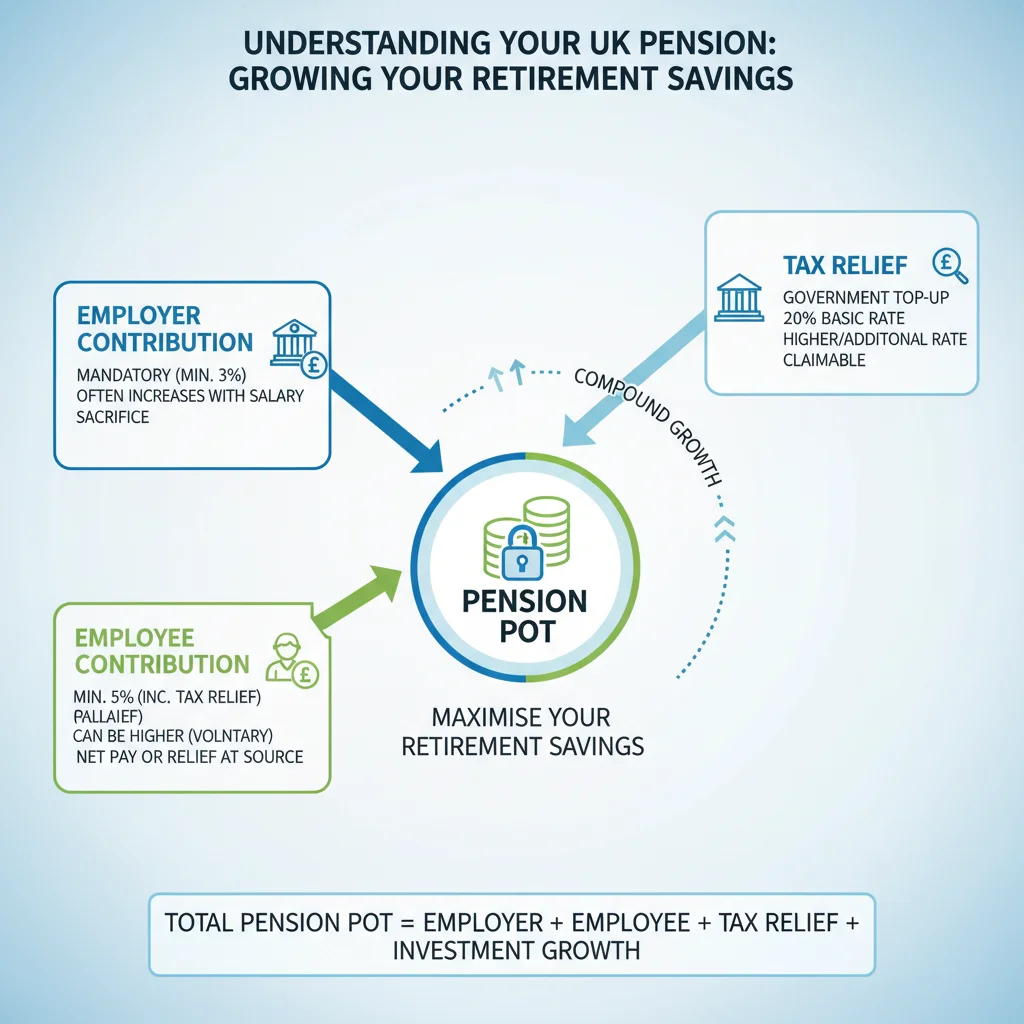
One of the most attractive features of pension saving in the UK is the generous tax relief offered on contributions. When you contribute to a pension, the government effectively adds money to your pot in the form of tax relief, based on your income tax rate. Basic rate taxpayers receive 20% tax relief automatically, meaning for every £80 you contribute, the government adds £20, making your total contribution £100. Higher and additional rate taxpayers can claim even more relief through their self-assessment tax return, potentially boosting their contributions by an extra 20% or 25% respectively.
Consider the impact of the increased annual allowance of £60,000. If you are a higher rate taxpayer, contributing an additional £10,000 to your pension could lead to an extra £2,000 in tax relief. This is because a 40% taxpayer would receive £4,000 in tax relief on that £10,000 contribution (20% automatically, and another 20% claimed back). If you were previously restricted by the £40,000 limit and can now contribute up to £60,000, that extra £20,000 contribution could result in a significant tax relief boost, directly increasing your pension pot without you needing to find all the capital yourself. This is a direct way to see your retirement savings grow by that impressive £2,000 figure.
It’s vital to ensure you are claiming all the tax relief you are entitled to, especially if you are a higher or additional rate taxpayer. For many, this involves informing HMRC via a self-assessment tax return. Failure to do so means you’re leaving money on the table that could be compounding within your pension fund. This mechanism makes pension contributions incredibly efficient for wealth building. By fully understanding and utilising the tax relief system, you can significantly accelerate your journey towards a comfortable retirement, making the most of the current UK pension limits.
Strategic Planning: Making the Most of the Updated Limits
With the updated UK pension limits, strategic planning has become even more critical for optimising your retirement savings. It’s no longer just about contributing; it’s about contributing smartly. The increased annual allowance and the abolition of the lifetime allowance open up new avenues for growth, but they also require a thoughtful approach to ensure you’re not missing out on any benefits or inadvertently incurring charges. A thorough review of your current financial situation and future goals is the first step in this process.
One key strategy involves reviewing your employer’s pension scheme. Many employers offer to match your contributions up to a certain percentage, which is essentially free money for your retirement. If you’re not contributing enough to maximise this employer match, you’re missing a significant opportunity. Combining this with the increased annual allowance means you can potentially contribute more, benefit from higher employer contributions, and receive substantial tax relief, all contributing to a much larger pension pot over time. This integrated approach is far more effective than just focusing on one aspect of your savings.
Another crucial element of strategic planning is considering your long-term financial objectives. Are you aiming for early retirement? Do you have specific financial milestones in mind? The increased flexibility provided by the new limits allows for more aggressive saving strategies if your circumstances permit. This might involve using the carry forward rules to make a large one-off contribution or simply consistently contributing the maximum possible each year. Regular reviews of your pension performance and contribution levels are also essential to ensure you remain on track and adapt to any changes in your personal or financial situation. Don’t underestimate the power of consistent, informed action when it comes to retirement planning.
Frequently Asked Questions
What is the new annual allowance for UK pension contributions?
The standard annual allowance for UK pension contributions has increased from £40,000 to £60,000 for the current tax year. This is the maximum amount you and your employer can contribute to your pensions each year while still benefiting from tax relief.
How does the abolition of the lifetime allowance affect my pension?
The abolition of the lifetime allowance means there is no longer a cap on the total value of pension savings you can accumulate over your lifetime without incurring an extra tax charge. This allows for greater flexibility and removes a previous barrier to extensive retirement saving.
Can I use unused annual allowance from previous years?
Yes, you can use the carry forward rule to utilise unused annual allowance from the three previous tax years. You must first use your full allowance for the current year before you can carry forward any unused amounts from prior years.
How do I claim higher or additional rate tax relief on my pension contributions?
Basic rate tax relief (20%) is usually applied automatically. If you are a higher (40%) or additional (45%) rate taxpayer, you typically need to claim the extra tax relief through a self-assessment tax return to receive the full benefit.
What is the ‘£2,000’ maximisation mentioned in the article?
The ‘£2,000’ maximisation refers to the potential additional tax relief a higher rate taxpayer could receive by contributing an extra £10,000 to their pension, now possible due to the increased annual allowance. This additional tax relief directly boosts your pension pot.
The recent updates to UK pension limits, particularly the increase in the annual allowance to £60,000 and the abolition of the lifetime allowance, mark a significant positive shift for retirement savers. These changes provide unprecedented flexibility and opportunities to boost your pension pot, potentially adding thousands of pounds in tax relief and contributions. By understanding and strategically utilising these new rules, individuals can significantly enhance their financial security in retirement.
Whether it’s leveraging carry forward rules to make larger contributions, maximising employer matches, or ensuring you claim all eligible tax relief, proactive planning is key. Don’t let these valuable opportunities pass you by. Take the time to review your current pension arrangements, consider your financial goals, and seek professional advice if needed. By doing so, you can confidently navigate the updated landscape and build a more robust and comfortable financial future for yourself and your loved ones.
pedropadm2025@gmail.com
Peter B holds a degree in Journalism and has 5 years of experience covering U.S. economic policy, labor markets, and financial news. He writes data-driven news content on topics like inflation, interest rates, and employment trends.