Discover essential strategies for maximising your ISA allowance and making the most of your £20,000 tax-free savings limit. This guide provides expert advice to help you plan effectively before the April deadline, ensuring your investments grow efficiently.
By: Michael Sete on August 22, 2026
Última atualização em: agosto 24, 2026
As the tax year draws to a close, many individuals in the UK turn their attention to financial planning, particularly when it comes to optimising their tax-efficient savings. One of the most effective ways to do this is by maximising your ISA allowance. With a generous £20,000 limit available each tax year, understanding how to best utilise this allowance can significantly impact your long-term financial health. The April deadline approaches quickly, making it crucial to have a clear strategy in place to ensure you don’t miss out on valuable tax-free growth opportunities.
This comprehensive guide will walk you through expert strategies for making the most of your ISA allowance. We will explore the different types of ISAs, delve into smart investment approaches, and provide practical tips to help you navigate the complexities of personal finance before the end of the tax year. By understanding the nuances of ISA contributions and potential investment vehicles, you can set yourself on a path toward greater financial security and growth, ensuring every pound of your allowance works as hard as possible for you.
Understanding Your ISA Allowance and Its Benefits
The Individual Savings Account (ISA) is a cornerstone of personal finance in the UK, offering a powerful way to save and invest without paying tax on your returns. Each tax year, which runs from 6th April to 5th April the following year, you are granted a specific allowance, currently set at £20,000. This means you can contribute up to this amount across various ISA types, and any income or capital gains generated within these accounts are completely free from UK income tax and capital gains tax. This tax-efficient wrapper makes ISAs an indispensable tool for anyone looking to build wealth, whether for short-term goals or long-term aspirations like retirement or a house deposit.
The primary benefit of an ISA lies in its tax-free status. Unlike standard savings accounts or investments held outside an ISA, you won’t pay tax on interest, dividends, or profits from investments. This can lead to substantial savings over time, especially for higher-rate taxpayers or those with significant investment portfolios. Furthermore, the flexibility of ISAs allows you to choose from different types, each designed to suit various financial objectives. Understanding these benefits is the first step towards effectively maximising your ISA allowance and ensuring your money grows as efficiently as possible.
Key Benefits of Utilising Your ISA Allowance
Tax-Free Growth: All interest, dividends, and capital gains within an ISA are exempt from UK tax. This means more of your returns stay in your pocket, accelerating wealth accumulation.
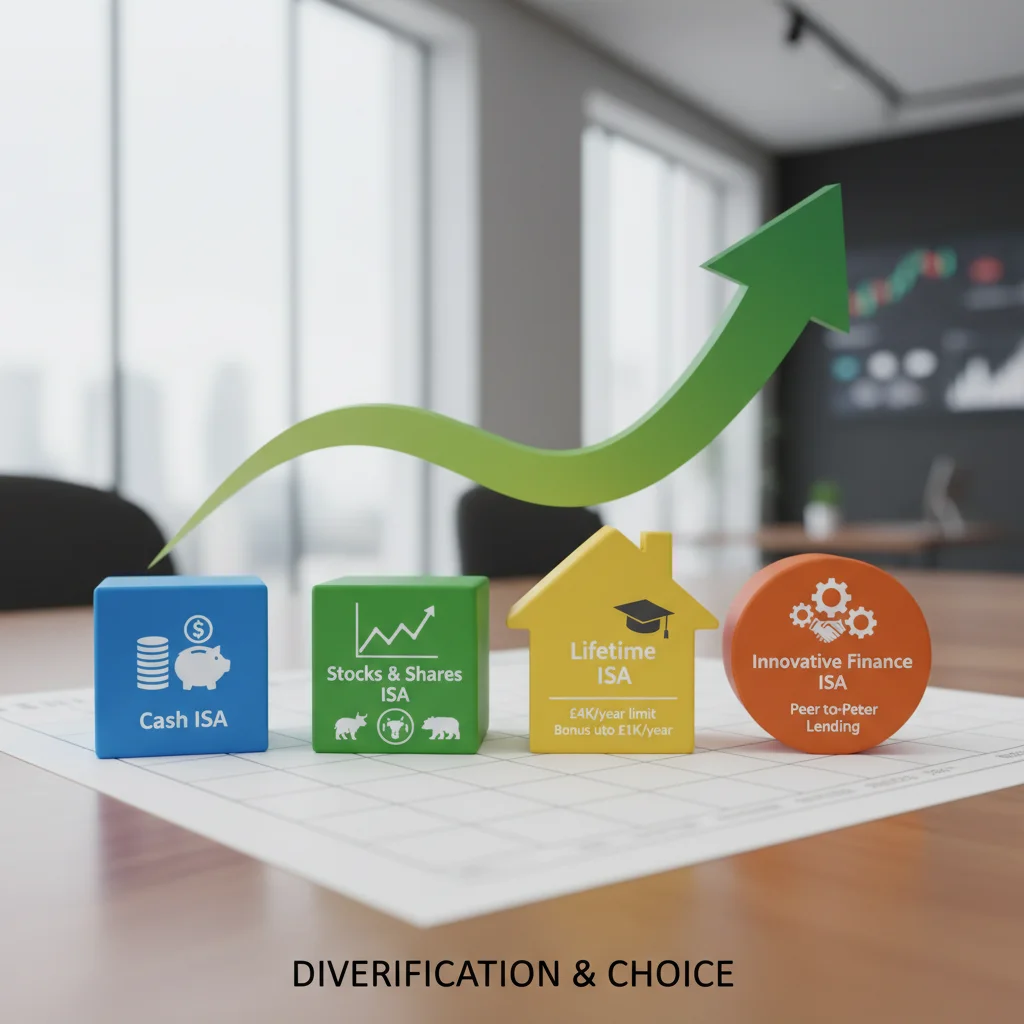
Flexibility Across ISA Types: You can split your £20,000 allowance across different ISA products, such as Cash ISAs, Stocks & Shares ISAs, Lifetime ISAs, and Innovative Finance ISAs, tailoring your savings strategy to your specific needs.
No Annual Tax Returns for ISA Holdings: You generally do not need to declare ISA income or gains on your annual tax return, simplifying your financial administration.
Long-Term Wealth Building: The compounding effect of tax-free returns over many years can significantly boost your overall savings and investments, helping you reach major financial milestones sooner.
Accessibility: While some ISA types have withdrawal conditions (like the Lifetime ISA), others offer relatively easy access to your funds if needed, providing a balance between growth and liquidity.
By understanding these core advantages, you can appreciate why maximising your ISA allowance is a critical component of sound financial planning. It’s not just about saving money; it’s about making your money work harder for you, free from the drag of taxation, year after year.
Exploring Different ISA Types for Strategic Investment
The world of ISAs is more diverse than many people realise, offering a range of options tailored to different financial goals and risk appetites. To truly succeed in maximising your ISA allowance, it’s essential to understand the distinct characteristics of each type. Your £20,000 annual allowance can be split across these, or you can allocate the entire sum to one specific type, depending on what best suits your individual circumstances. Making an informed choice now can have a significant impact on your financial future, particularly as the April deadline approaches.
The main types include Cash ISAs, Stocks & Shares ISAs, Lifetime ISAs, and Innovative Finance ISAs. Each comes with its own set of rules, benefits, and potential drawbacks, making a careful evaluation necessary. For instance, a Cash ISA offers security and easy access but typically lower returns, while a Stocks & Shares ISA provides growth potential but carries investment risk. A balanced approach might involve utilising a combination, ensuring you leverage the strengths of each to meet your diverse financial objectives.
Matching ISA Types to Your Financial Goals
Choosing the right ISA type is fundamental to an effective savings strategy. If your priority is short-term savings or an emergency fund, a Cash ISA might be the most suitable choice due to its low risk and liquidity. However, for long-term growth, a Stocks & Shares ISA often proves more beneficial, as it allows your money to be invested in a wider range of assets like equities, bonds, and funds, potentially offering higher returns over time. The Lifetime ISA, on the other hand, is specifically designed for first-time buyers or retirement savings, offering a government bonus that can significantly boost your contributions.
Innovative Finance ISAs cater to those willing to explore peer-to-peer lending, potentially offering attractive returns but with higher risk. Understanding your own financial goals, time horizon, and comfort with risk is paramount. Don’t simply opt for the most popular choice; instead, assess which ISA type, or combination of types, aligns best with what you want to achieve. This strategic allocation of your allowance is a key step in maximising your ISA allowance and setting yourself up for financial success.
Strategic Contributions: Lump Sum vs. Regular Payments
Once you’ve decided which ISA types align with your financial goals, the next critical step in maximising your ISA allowance involves how and when you make your contributions. There are generally two main approaches: contributing a lump sum or making regular payments throughout the tax year. Each method has its own advantages and considerations, and the best choice often depends on your personal financial situation, cash flow, and investment philosophy. Understanding these options is vital for ensuring you fully utilise your £20,000 limit before the April deadline.
A lump sum contribution, typically made early in the tax year, allows your money to be invested or saved for the longest possible period, potentially benefiting from more time in the market. This can be particularly advantageous for Stocks & Shares ISAs, where longer investment horizons often correlate with greater returns due to compounding. However, not everyone has a large sum of money readily available at the start of the tax year. For many, a more practical approach is to make regular, smaller contributions.
Regular payments, such as monthly direct debits, can help to spread the financial commitment throughout the year, making it more manageable. This approach also benefits from ‘pound cost averaging,’ where you invest a fixed amount regularly, buying more units when prices are low and fewer when prices are high. Over time, this can smooth out market volatility and lead to a more favourable average purchase price. Whether you opt for a lump sum or regular payments, consistency is key to ensuring you contribute the full £20,000 and avoid missing out on any part of your allowance.
Consider your personal financial discipline and cash flow when making this decision. If you find it challenging to save a large amount at once, regular contributions might be a more sustainable strategy. Conversely, if you receive a bonus or have available funds from other sources, a lump sum might be an efficient way to immediately put your allowance to work. The most important thing is to have a plan and stick to it, ensuring that you don’t leave any of your valuable tax-free allowance unused as the tax year draws to a close.
Reviewing and Consolidating Your Existing ISAs
As you progress through your financial journey, it’s common to accumulate multiple ISA accounts from different providers. While having several ISAs isn’t inherently problematic, it can sometimes lead to inefficiencies, such as lower interest rates on Cash ISAs, higher fees on Stocks & Shares ISAs, or simply a fragmented view of your overall savings. Regularly reviewing and potentially consolidating your existing ISAs is a crucial step in truly maximising your ISA allowance and ensuring your investments are working as hard as possible for you. This process can simplify your financial administration and potentially boost your returns.
One of the primary reasons for consolidation is to achieve better rates or lower fees. The financial market is constantly evolving, and the best deals on Cash ISAs today might not be the best tomorrow. Similarly, the fees charged by Stocks & Shares ISA providers can vary significantly, impacting your net returns over the long term. By transferring your ISAs to a provider offering more competitive rates or lower charges, you can optimise the growth of your tax-free savings. It’s important to remember that ISA transfers must be done correctly to maintain their tax-free status; you should always use the official transfer process provided by your new ISA manager.
Benefits of ISA Consolidation
Simplified Management: Having all your ISAs with one provider or a limited number of providers makes it easier to track your investments and manage your portfolio. You get a clearer picture of your overall financial position.
Potentially Higher Returns/Lower Fees: By moving funds to accounts with better interest rates or lower management fees, you can improve the performance of your ISA savings without increasing your contributions.
Easier to Utilise Allowance: With a consolidated view, it’s simpler to see how much of your annual £20,000 allowance you have used and how much remains, aiding in more effective planning before the tax year end.
Access to Wider Investment Options: Some providers offer a broader range of investment choices or better platforms for managing Stocks & Shares ISAs, which you might gain access to through consolidation.
Streamlined Administration: Fewer statements, fewer logins, and a single point of contact can significantly reduce the administrative burden of managing your tax-free savings.
Before initiating any transfers, always compare providers carefully, paying attention to rates, fees, customer service, and the range of products offered. Ensure you understand any potential exit fees from your current provider and confirm that the new provider accepts transfers of your specific ISA type. Taking the time to review and consolidate your ISAs can be a highly effective strategy for maximising your ISA allowance and optimising your financial future.
Last-Minute Tips for Maximising Your ISA Allowance
As the April deadline for the current tax year rapidly approaches, time becomes a critical factor in ensuring you’ve fully utilised your ISA allowance. Even if you haven’t meticulously planned your contributions throughout the year, there are still effective last-minute strategies you can employ to make the most of your remaining £20,000 limit. Procrastination can lead to missed opportunities, so understanding these final steps is crucial for anyone looking to secure their tax-free savings before it’s too late. Don’t let the deadline catch you unprepared; a few swift actions can make a significant difference.
First and foremost, determine exactly how much of your £20,000 allowance you have left to contribute. Check your existing ISA accounts and consolidate any information you have. If you have funds available, even if it’s a smaller amount than the full allowance, contributing it is better than letting the allowance go to waste. Remember, any unused allowance from the current tax year cannot be carried over to the next; it’s a ‘use it or lose it’ opportunity. Consider making a final lump sum payment into your preferred ISA type, whether it’s a Cash ISA for immediate savings or a Stocks & Shares ISA for longer-term growth.
Another important tip is to be aware of processing times. While the deadline is in April, some providers may require contributions to be made a few days earlier to ensure they are processed within the current tax year. Check with your ISA provider for their specific cut-off times to avoid disappointment. If you’re considering opening a new ISA, do so well in advance, as the application process itself can take a few days. Finally, don’t forget about ‘Bed and ISA’ if you have existing investments outside an ISA wrapper. This strategy involves selling investments from a taxable account and immediately repurchasing them within an ISA, effectively sheltering future gains from tax. While it needs careful planning around capital gains tax allowances, it can be a powerful last-minute move for maximising your ISA allowance and enhancing your tax efficiency.
Frequently Asked Questions
What happens if I don’t use my full ISA allowance?
If you don’t use your full £20,000 ISA allowance by the end of the tax year (April 5th), the unused portion is lost. It cannot be carried over to the next tax year, so it’s a ‘use it or lose it’ opportunity each year.
Can I have more than one ISA?
Yes, you can open and pay into multiple types of ISAs in the same tax year, provided you do not exceed your overall £20,000 annual allowance. For example, you could contribute to a Cash ISA and a Stocks & Shares ISA within the same year.
Is there a minimum contribution for an ISA?
While there’s a maximum annual allowance, there isn’t a universal minimum contribution. Many providers allow you to start with as little as £1, or even £25 per month for regular savings plans. Check with individual providers for their specific requirements.
Are all ISA returns completely tax-free?
Yes, all interest, dividends, and capital gains earned within any type of ISA are completely free from UK income tax and capital gains tax. This is the primary benefit of investing through an ISA wrapper.
How do I transfer an existing ISA?
To transfer an ISA, you must contact your new ISA provider and request an ISA transfer. Never withdraw the funds yourself, as this will cause them to lose their tax-free status. The new provider will handle the transfer process directly with your old provider.
Maximising your ISA allowance is a fundamental aspect of sound financial planning in the UK, offering unparalleled tax efficiency for your savings and investments. As we’ve explored, understanding the £20000 annual limit, differentiating between the various ISA types, and strategically planning your contributions are all crucial steps. Whether you opt for a lump sum at the start of the tax year or consistent regular payments, the key is to ensure you fully utilise this valuable opportunity before the April deadline. Don’t let any portion of your allowance go to waste, as it cannot be carried over.
Beyond initial contributions, regularly reviewing and consolidating your existing ISAs can further optimise your returns by securing better rates and lower fees, while simplifying your financial management. Even as the tax year draws to a close, last-minute strategies like checking provider cut-off times and considering ‘Bed and ISA’ can help you make the most of your remaining allowance. By taking proactive steps and making informed decisions, you can effectively leverage your ISA allowance to accelerate your wealth accumulation and achieve your financial goals with greater confidence and efficiency.