Mastering UK Pension Contributions: £60,000 Annual Allowance Explained
Navigate the complexities of UK pension contributions with our comprehensive guide. Learn about the £60,000 annual allowance, how it impacts your savings, and the recent changes to the lifetime allowance to optimise your retirement strategy.
By: Michael Sete on August 22, 2026
Última atualização em: agosto 24, 2026
Pension Contributions Unpacked: Your Guide to the £60,000 Annual Allowance and Beyond
Understanding your pension contributions in the UK is crucial for securing a comfortable retirement. Recent changes, particularly concerning the annual allowance and the lifetime allowance, have made it even more important to grasp how much you can save and how these limits affect your financial planning. This comprehensive guide will unpack everything you need to know about navigating your pension contributions effectively, ensuring you make the most of your retirement savings.
The landscape of UK pension contributions has seen significant updates, with the annual allowance now set at £60,000. This increase offers a greater opportunity for individuals to build their pension pots, but it also comes with complexities that require careful attention. We will delve into the specifics of this allowance, explore the implications of the lifetime allowance’s removal, and provide practical insights to help you optimise your pension strategy.
The £60,000 Annual Allowance: What You Need to Know
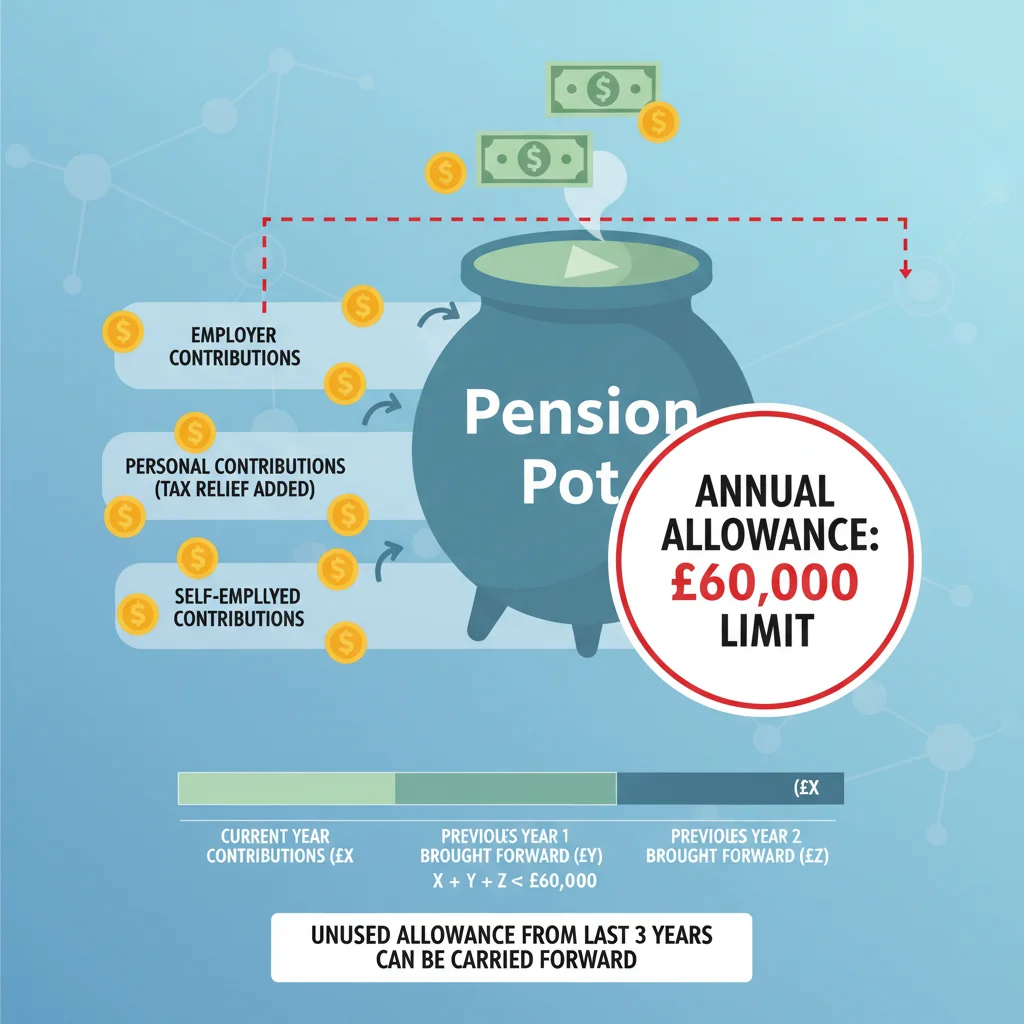
The annual allowance is the maximum amount of money that can be paid into your pension schemes in a single tax year while still benefiting from tax relief. For the 2023/24 tax year, this limit was increased to £60,000. This includes contributions made by you, your employer, and any third parties, as well as any tax relief added by the government. It’s a generous allowance designed to encourage retirement saving, but it’s vital to understand how it works to avoid potential tax charges.
Exceeding the annual allowance can lead to an annual allowance charge, which effectively claws back any tax relief you received on contributions above the limit. This charge is added to your income tax bill. Therefore, careful monitoring of your total pension contributions across all schemes is essential. Many people might have multiple pension pots from different employers or personal pensions, so tracking all contributions can be a complex task, but it is necessary to prevent unexpected tax liabilities.
It’s also important to remember that the annual allowance applies to all your pension arrangements. This means if you have a workplace pension, a personal pension, and perhaps a self-invested personal pension (SIPP), all contributions across these schemes are aggregated. If your total contributions for the year exceed £60,000, you will be liable for a tax charge on the excess. This tax charge is usually levied at your marginal rate of income tax, meaning higher earners could face a significant bill if they over-contribute without planning.
Understanding Carry Forward Rules for Unused Allowance
Even if you haven’t contributed the full £60,000 to your pension in a given tax year, you might not lose the unused portion. The UK pension system allows for something called ‘carry forward,’ which enables you to use unused annual allowances from the three previous tax years. This rule provides a valuable opportunity to make larger pension contributions in a current year, particularly if your income has increased or if you’ve received a significant bonus.
To utilise carry forward, you must have been a member of a registered pension scheme in the tax years from which you are carrying forward the allowance. You must also have used up your full annual allowance for the current tax year before you can dip into previous years’ unused allowances. For example, if you contributed £30,000 in the current year, you would need to use up the remaining £30,000 of the current year’s allowance before accessing any unused allowance from the previous three years. This makes pension contributions UK planning more flexible.
The maximum amount you can carry forward is the difference between your contributions and the annual allowance for each of the three preceding years. For instance, if the annual allowance was £40,000 in a previous year and you only contributed £10,000, you would have £30,000 available to carry forward from that specific year. It’s crucial to calculate these amounts accurately and ensure you have sufficient taxable earnings in the current year to cover the contributions, as tax relief is only granted on contributions up to 100% of your relevant UK earnings.
Impact of the Tapered Annual Allowance
While the standard annual allowance is £60,000, some high earners may face a reduced limit due to the tapered annual allowance. This taper applies if your ‘adjusted income’ exceeds £260,000 and your ‘threshold income’ is over £200,000. When these conditions are met, your annual allowance is reduced by £1 for every £2 your adjusted income exceeds £260,000, down to a minimum annual allowance of £10,000. This reduction significantly impacts the amount high earners can contribute tax-efficiently.
Calculating adjusted income and threshold income can be complex. Threshold income is generally your net income for the year, excluding any pension contributions paid under a net pay arrangement or relief at source, but including any salary sacrificed for pension contributions. Adjusted income is your total income plus employer pension contributions. It’s important to differentiate these two figures, as both need to be considered when determining if the taper applies to your pension contributions UK. Many individuals find it beneficial to seek professional financial advice to accurately determine their tapered annual allowance.
The tapered annual allowance can have a substantial effect on your long-term retirement planning, as it limits the amount you can save with tax relief. For those affected, understanding how to manage their contributions and potentially utilise carry forward rules becomes even more critical. Strategic planning, such as adjusting salary sacrifice arrangements or making use of available unused allowances from previous years, can help mitigate the impact of the taper. Without careful consideration, high earners could inadvertently exceed their tapered allowance and face unexpected tax charges, diminishing the effectiveness of their pension savings.
The Removal of the Lifetime Allowance: What it Means
A significant change in the UK pension landscape is the removal of the pension lifetime allowance from 6 April 2024. Prior to this, the lifetime allowance was a limit on the total value of pension benefits you could build up over your working life without incurring an extra tax charge. This limit was £1,073,100 for the 2022/23 tax year. Its abolition simplifies pension planning for many, especially those with substantial pension pots, and removes a major barrier to saving more for retirement.
While the lifetime allowance charge has been removed, there are still some complexities and new limits to be aware of. The government has introduced new allowances to manage the tax-free lump sum component of pension withdrawals. Specifically, there’s a new ‘lump sum allowance’ (LSA) and a ‘lump sum and death benefit allowance’ (LSDBA). These new allowances effectively cap the amount of tax-free cash you can take from your pension, and the total amount that can be paid out tax-free upon death, respectively.
For most people, the LSA will be 25% of their previous lifetime allowance, capped at £268,275. The LSDBA will generally be set at the previous lifetime allowance of £1,073,100. This means that while you can accumulate an unlimited amount in your pension without a lifetime allowance charge, the tax-free elements are still subject to limits. It’s crucial for individuals nearing retirement or those with large pension pots to understand these new caps to plan their withdrawals effectively and avoid unexpected tax implications on their pension contributions UK.
Strategic Pension Planning: Maximising Your Savings
Effective pension planning goes beyond simply contributing up to the annual allowance. It involves a holistic approach to your financial future, considering your income, expenses, investment strategy, and long-term goals. With the increased annual allowance and the removal of the lifetime allowance, there’s a greater opportunity to build a substantial retirement fund, but it requires careful thought and strategic decisions. One key aspect is regularly reviewing your pension performance and ensuring your investments align with your risk tolerance and time horizon.
Key Strategies for Optimising Pension Contributions
Regularly Review Contributions: Don’t just set and forget. Periodically check if you’re on track to meet your retirement goals and adjust contributions as your financial situation changes. This includes considering salary increases or bonuses.
Utilise Carry Forward: If you have unused allowance from previous years, and your current income allows, consider making larger contributions to catch up on your savings. This is particularly useful for those who started saving later or had periods of lower income.
Understand Tax Relief: Ensure you’re receiving the correct amount of tax relief on your contributions. Basic rate taxpayers receive relief automatically, but higher and additional rate taxpayers often need to claim the extra relief via their self-assessment tax return.
Consider Employer Contributions: If your employer offers to match your contributions, always contribute at least enough to get the maximum employer contribution. This is essentially ‘free money’ for your retirement and significantly boosts your pension pot.
Seek Professional Advice: For complex situations, such as those affected by the tapered annual allowance or nearing the new lump sum limits, consulting a financial adviser can provide tailored guidance and ensure you’re making the most informed decisions.
By actively engaging with your pension planning and understanding the rules surrounding pension contributions UK, you can set yourself up for a financially secure retirement. The changes to the allowances present both opportunities and challenges, making proactive management more important than ever. Don’t underestimate the power of consistent, well-planned contributions over the long term.
Frequently Asked Questions
What is the main difference between annual allowance and lifetime allowance?
The annual allowance limits how much you can contribute to your pension each tax year with tax relief. The lifetime allowance, which has now been removed, used to cap the total value of your pension benefits across your lifetime without incurring an extra tax charge.
Can I exceed the £60,000 annual allowance?
Yes, you can contribute more than £60,000, but any contributions above this limit will not receive tax relief and will be subject to an annual allowance charge, effectively taxing the excess at your marginal income tax rate.
How do I know if I’m affected by the tapered annual allowance?
You are likely affected if your ‘adjusted income’ (total income plus employer pension contributions) exceeds £260,000, and your ‘threshold income’ (net income excluding certain pension contributions) is over £200,000.
What are the new limits for tax-free lump sums after the lifetime allowance removal?
While the lifetime allowance is gone, new caps exist. The ‘lump sum allowance’ (LSA) generally caps tax-free cash at £268,275, and the ‘lump sum and death benefit allowance’ (LSDBA) typically limits total tax-free payments to £1,073,100.
Is it always best to contribute the maximum to my pension?
Contributing the maximum can be highly beneficial for tax relief and retirement savings, but it depends on your individual financial circumstances, current income needs, and other financial goals. It’s wise to balance pension contributions with other savings and debt repayment.
Navigating the world of pension contributions in the UK, especially with the recent changes to the annual allowance and the abolition of the lifetime allowance, can seem daunting. However, understanding these key aspects is fundamental to building a robust retirement fund. The increase of the annual allowance to £60,000 offers a significant opportunity for many to boost their savings, while the carry forward rules provide valuable flexibility. For high earners, the tapered annual allowance requires careful consideration, highlighting the importance of strategic planning.
The removal of the lifetime allowance simplifies long-term pension growth, yet new limits on tax-free lump sums mean vigilance is still necessary. By regularly reviewing your contributions, utilising available allowances, and seeking expert advice when needed, you can optimise your pension strategy. Your retirement security hinges on informed decisions today. Take the time to understand these rules and proactively manage your pension contributions to ensure a comfortable and financially stable future.