Boost UK Apprenticeship Success: Funding & Strategy Guide
Discover how to significantly boost your UK apprenticeship success rate by understanding and leveraging new funding models. This guide provides actionable strategies for optimising every stage, from attracting top talent to ensuring long-term retention.
By: pedropadm2025@gmail.com on August 24, 2026
Achieving a higher UK apprenticeship success rate is a crucial goal for many businesses looking to develop skilled workforces and contribute to national economic growth. Navigating the evolving landscape of apprenticeship funding models requires a strategic approach, but with the right insights, employers can significantly boost their UK apprenticeship success. This article delves into practical strategies and insider tips designed to help you maximise the impact of your apprenticeship programmes, ensuring better outcomes for both your organisation and your apprentices.
Understanding the nuances of the apprenticeship levy, government incentives, and effective programme design is key to unlocking the full potential of these vital training pathways. We’ll explore how optimising recruitment, enhancing the learning experience, and implementing robust support systems can lead to a more engaged and successful apprentice cohort. By focusing on these critical areas, businesses can not only meet but exceed their apprenticeship objectives, fostering a pipeline of talented individuals ready to drive future innovation and productivity.
Understanding the UK Apprenticeship Funding Landscape
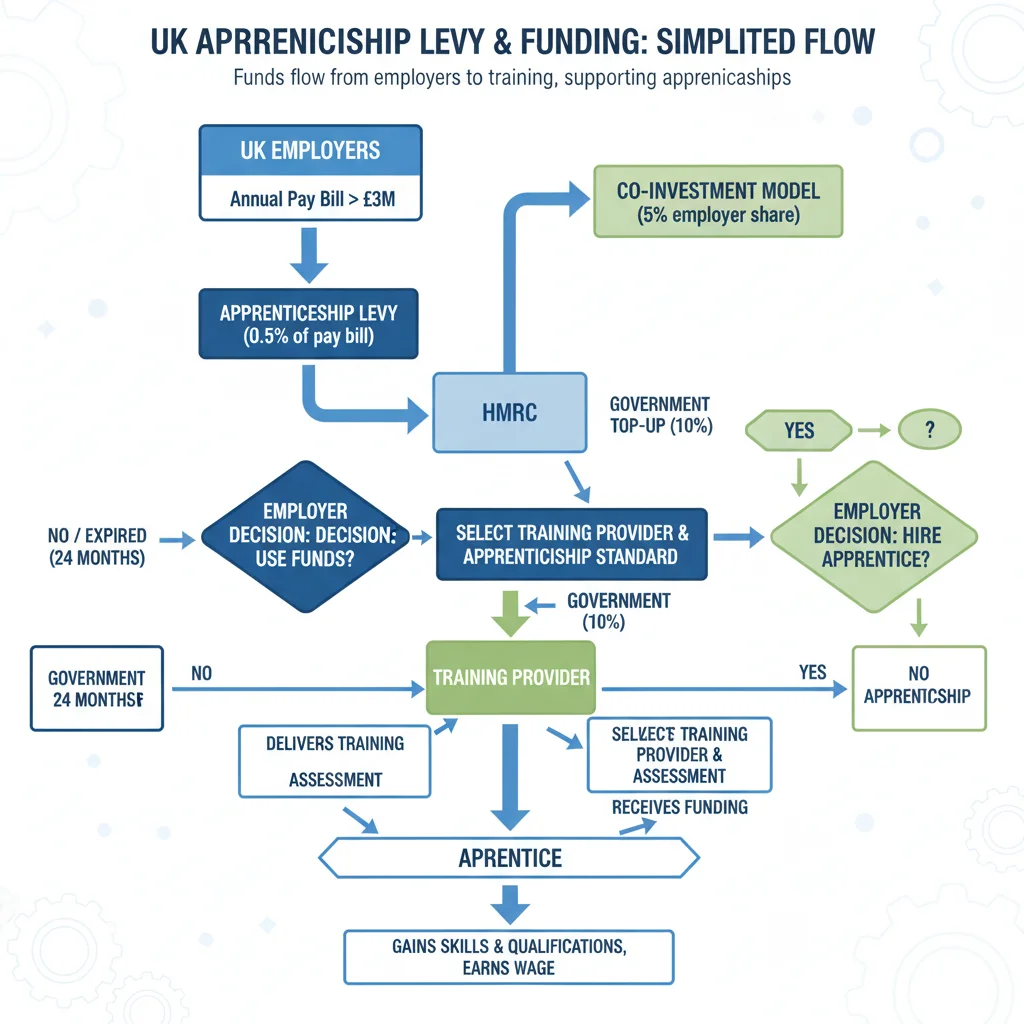
The UK apprenticeship funding landscape can seem intricate, but grasping its core mechanisms is fundamental to boosting your UK apprenticeship success rate. At its heart lies the apprenticeship levy, a tax on larger employers to fund apprenticeships. Employers with an annual pay bill exceeding £3 million contribute 0.5% of their pay bill to the levy. These funds are then accessible through an online account, allowing businesses to pay for apprenticeship training and assessment costs. For smaller employers, those not paying the levy, the government covers a significant portion of apprenticeship training costs, typically 95%, with the employer contributing the remaining 5%. This co-investment model makes apprenticeships accessible to a wide range of businesses, regardless of their size.
Beyond the basic levy and co-investment, various incentives are available to encourage employers to take on apprentices. These can include payments for hiring young apprentices (aged 16-18) or for apprentices with additional learning needs. These incentives are designed to support employers in creating diverse and inclusive apprenticeship opportunities, further enhancing the overall impact of the programmes. Staying informed about these incentives is vital, as they can significantly reduce the financial burden and make apprenticeships even more attractive. Effective management of these funds and incentives allows businesses to invest more strategically in their training programmes, directly impacting the quality and longevity of their apprenticeships.
Navigating these funding streams effectively requires careful planning and a clear understanding of the eligibility criteria for different grants and support packages. Many employers find it beneficial to work closely with training providers who possess expertise in this area, as they can offer guidance on optimising funding utilisation. This collaboration ensures that every available resource is leveraged to its full potential, from initial recruitment through to the apprentice’s completion. Ultimately, a well-informed approach to funding is the bedrock upon which a successful and sustainable apprenticeship programme is built, paving the way for higher achievement rates and a stronger future workforce.
Optimising Apprentice Recruitment and Selection
Optimising apprentice recruitment and selection is a critical step towards achieving a higher UK apprenticeship success rate. The quality of your intake directly correlates with the programme’s overall success. It’s not just about filling vacancies; it’s about finding individuals who are genuinely motivated, possess the right aptitude, and align with your company culture. A robust recruitment strategy moves beyond traditional job postings, focusing on attracting a diverse pool of candidates. This might involve engaging with schools, colleges, and community organisations to reach potential apprentices who may not be actively seeking opportunities through conventional channels. Highlighting the long-term career progression and development opportunities within your organisation can also significantly enhance your appeal to prospective apprentices.
Once you have attracted a pool of candidates, the selection process needs to be thorough and fair. Beyond academic qualifications, assess soft skills such as problem-solving, teamwork, communication, and resilience. These attributes are often more indicative of an apprentice’s ability to thrive in a workplace environment and adapt to new learning challenges. Consider using a variety of assessment methods, including practical tasks, group exercises, and competency-based interviews, to gain a comprehensive understanding of each candidate’s potential. Providing clear information about the apprenticeship programme, including its demands and expectations, helps candidates make informed decisions, reducing the likelihood of early attrition.
Successful recruitment also involves setting clear expectations from the outset. Be transparent about the learning journey, the support available, and the career prospects post-apprenticeship. This honesty builds trust and ensures that apprentices are fully committed to their development. Furthermore, involving existing apprentices or recent graduates in the recruitment process can offer valuable peer insight and make the experience more relatable for applicants. By investing time and effort into a well-structured recruitment and selection process, you lay a strong foundation for an apprenticeship programme that yields high completion rates and produces skilled, dedicated employees, directly contributing to your UK apprenticeship success.
Enhancing the Apprenticeship Learning Experience
Enhancing the apprenticeship learning experience is paramount for boosting your UK apprenticeship success rate. It’s not enough to simply enrol apprentices; businesses must actively cultivate an environment where learning is prioritised, supported, and integrated into daily work. This involves working closely with training providers to ensure the curriculum is relevant, engaging, and directly applicable to the apprentice’s role and future career path. Regular feedback loops between the employer, apprentice, and training provider are essential to identify areas for improvement and adapt the training as needed. A dynamic curriculum that evolves with industry trends ensures apprentices are always learning the most up-to-date skills.
Providing a dedicated mentor within the workplace is another cornerstone of an enhanced learning experience. A good mentor offers guidance, shares expertise, and acts as a sounding board for challenges, significantly impacting an apprentice’s confidence and progression. Mentors should be experienced employees who are genuinely committed to supporting the apprentice’s development, not just overseeing their tasks. Regular one-to-one sessions, structured check-ins, and informal opportunities for discussion all contribute to a strong mentor-apprentice relationship. This personal support system helps apprentices navigate workplace dynamics and academic requirements, fostering a sense of belonging and value.
Key Elements for an Enriched Learning Journey
Structured Onboarding: A comprehensive introduction to the company culture, values, and the apprenticeship programme itself.
Variety of Tasks: Exposing apprentices to a diverse range of responsibilities to broaden their skill set and understanding.
Access to Resources: Ensuring apprentices have the necessary tools, software, and learning materials for their studies and work.
Regular Progress Reviews: Formal and informal discussions to track development, celebrate achievements, and address concerns promptly.
Opportunities for Growth: Encouraging apprentices to take on new challenges and participate in projects that stretch their abilities.
Ultimately, an enriched learning experience goes beyond formal training; it’s about creating a supportive ecosystem where apprentices feel empowered to learn, grow, and contribute meaningfully to the organisation. This holistic approach not only improves retention but also ensures that apprentices emerge as highly competent and confident professionals, ready to make a lasting impact on your business and the wider UK workforce.
Implementing Robust Support and Retention Strategies
Implementing robust support and retention strategies is crucial for sustaining a high UK apprenticeship success rate long after recruitment and initial training. Apprentices, especially those new to the professional world, often face unique challenges that require consistent support. This extends beyond academic assistance to include emotional well-being, financial guidance, and career development advice. Employers should establish clear channels for apprentices to voice concerns, whether through their mentor, HR department, or a dedicated apprenticeship coordinator. Proactive check-ins and an open-door policy can help identify and address issues before they escalate, preventing early dropouts.
Retention strategies should begin even before the apprenticeship concludes, focusing on demonstrating clear pathways for progression within the company. Apprentices are more likely to commit long-term if they can envision a future with your organisation. This might involve offering permanent roles upon successful completion, outlining potential career advancement opportunities, or providing further training and development. Recognising and celebrating apprentice achievements, both big and small, also plays a significant role in fostering a positive and motivating environment. Public acknowledgement of their contributions can boost morale and reinforce their value to the team.
Furthermore, creating a strong sense of community among apprentices can be a powerful retention tool. Organising social events, peer-to-peer support networks, or even a dedicated apprentice forum allows them to share experiences, offer mutual support, and build lasting connections. This collegial atmosphere helps combat feelings of isolation and reinforces that they are part of a larger, supportive cohort. By prioritising comprehensive support systems and clearly defined career progression, businesses can significantly improve apprentice retention, ensuring that their investment in talent translates into long-term skilled employees and a consistently high UK apprenticeship success rate.
Measuring and Maximising Return on Investment
Measuring and maximising the return on investment (ROI) of your apprenticeship programmes is essential for continuous improvement and for justifying ongoing investment, directly contributing to your UK apprenticeship success rate. It’s not enough to simply track completion rates; a comprehensive evaluation considers both quantitative and qualitative benefits. Quantitatively, this involves assessing direct costs like training fees and salaries against tangible benefits such as increased productivity, reduced recruitment costs for entry-level positions, and a decrease in staff turnover. Tracking these metrics over time provides clear data on the financial advantages of your apprenticeship scheme. For instance, a skilled apprentice who stays with the company for several years represents a significant saving compared to continually recruiting and training new external hires.
Qualitatively, the ROI extends to less tangible but equally valuable aspects. This includes the enhancement of your company’s reputation as an employer of choice, improved team morale due to a culture of learning and development, and the injection of fresh perspectives and innovative ideas brought by new talent. Apprentices often bring a keenness to learn new technologies and methods, which can help drive innovation within your organisation. Gathering feedback from line managers, mentors, and the apprentices themselves through surveys and interviews can provide rich insights into these qualitative benefits. Understanding these broader impacts helps paint a complete picture of the value apprenticeships bring to your business, beyond just the numbers.
To maximise ROI, regularly review your apprenticeship programmes and make data-driven adjustments. Analyse which aspects of the training are most effective, identify any bottlenecks in the learning process, and assess the long-term career progression of your former apprentices. Are they staying with the company? Are they advancing into more senior roles? This ongoing evaluation allows you to fine-tune your recruitment, training, and support strategies to ensure optimal outcomes. By systematically measuring and actively working to improve your apprenticeship programmes, you not only ensure efficient use of resources but also consistently elevate your UK apprenticeship success rate, building a highly skilled and loyal workforce for the future.
Frequently Asked Questions
What is the apprenticeship levy and how does it affect my business?
The apprenticeship levy is a tax on UK employers with an annual pay bill over £3 million, set at 0.5% of their pay bill. These funds are used to pay for apprenticeship training and assessment costs, allowing levy-paying businesses to access a dedicated digital account for their apprenticeship investments.
Can small businesses access apprenticeship funding?
Yes, small businesses (those not paying the levy) can access significant government funding. The government typically covers 95% of the apprenticeship training and assessment costs, with the employer contributing the remaining 5% through a co-investment model.
How can I improve apprentice retention rates?
To improve retention, focus on providing dedicated mentorship, clear career progression pathways, and a supportive workplace environment. Regular check-ins, celebrating achievements, and fostering a sense of community among apprentices can also significantly boost their commitment.
What role do training providers play in apprenticeship success?
Training providers are crucial partners, delivering the formal education and assessment components of the apprenticeship. Collaborating closely with them ensures the curriculum is relevant, high-quality, and meets both industry standards and your business needs, directly impacting apprentice success.
Are there specific incentives for hiring young apprentices?
Yes, the UK government often provides additional incentives for employers who hire young apprentices, particularly those aged 16-18. These payments are designed to encourage businesses to invest in early career development and can help offset initial training costs.
Boosting your UK apprenticeship success rate is an achievable and highly rewarding endeavour for any organisation committed to nurturing talent and securing its future workforce. By strategically navigating the evolving funding models, optimising your recruitment processes to attract the best candidates, and enriching the learning experience with dedicated support, you lay a solid foundation for exceptional outcomes. The journey doesn’t end there; implementing robust retention strategies and consistently measuring your return on investment ensures continuous improvement and maximises the long-term benefits of your apprenticeship programmes. These integrated approaches create a virtuous cycle where highly skilled, loyal apprentices contribute significantly to your business’s growth and innovation.
The commitment to apprenticeships is an investment in both individual potential and collective prosperity. A higher success rate translates into a more competent and engaged workforce, reduced recruitment costs, and an enhanced reputation as an employer of choice. Embrace these insider strategies to transform your apprenticeship programmes into powerful engines of talent development, driving sustained success for your business and fostering a brighter future for the UK’s skilled professionals. Start implementing these insights today and watch your UK apprenticeship success rate soar.
pedropadm2025@gmail.com
Peter B holds a degree in Journalism and has 5 years of experience covering U.S. economic policy, labor markets, and financial news. He writes data-driven news content on topics like inflation, interest rates, and employment trends.