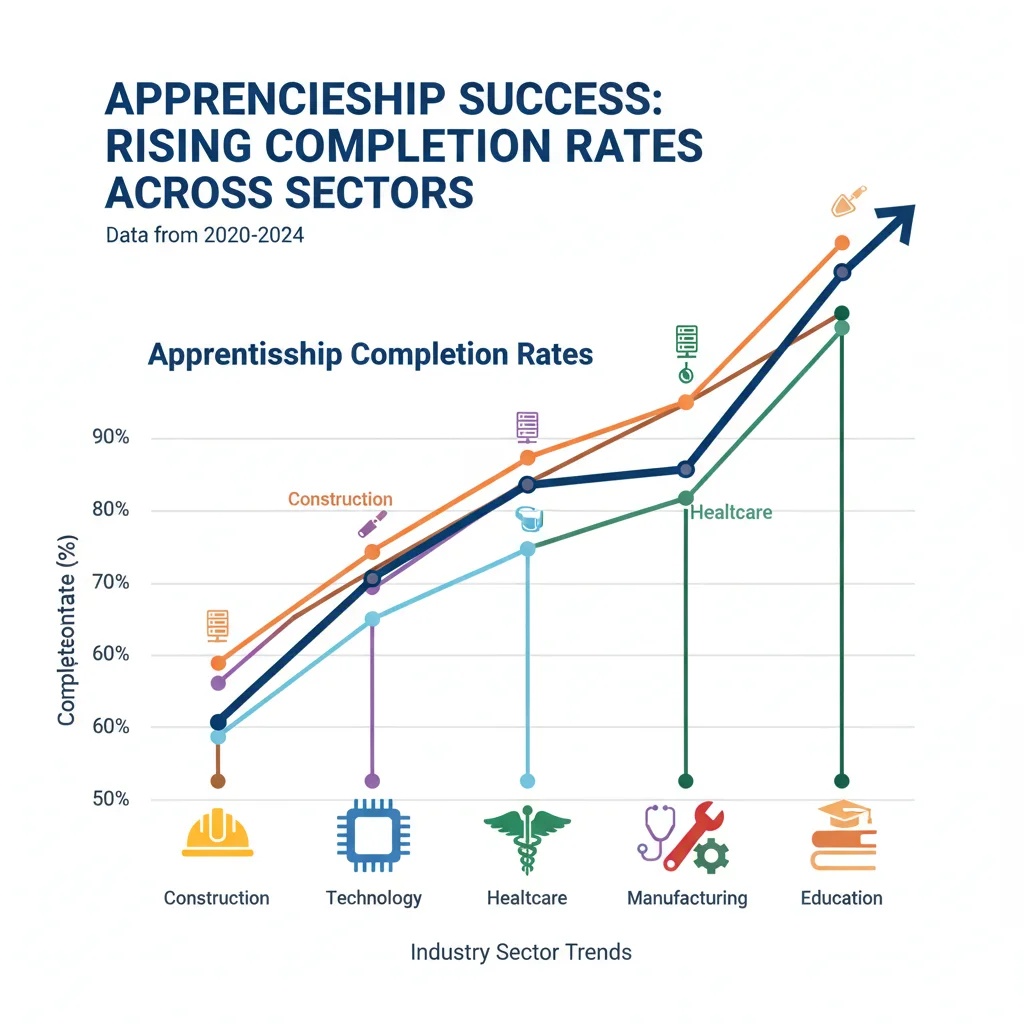
This article delves into apprenticeship success rates, examining the critical elements that contribute to achieving and exceeding the 70% completion benchmark across diverse sectors. Discover best practices and challenges in vocational training.
By: Michael Sete on August 22, 2026
Apprenticeships are a crucial pathway for developing skilled workforces, offering hands-on training combined with theoretical knowledge. Understanding apprenticeship success rates is vital for evaluating the effectiveness of these programs and ensuring they meet both individual and industry needs. The aspirational 70% completion mark often serves as a benchmark for program quality and participant retention across various sectors. This article explores the multifaceted factors that influence these success rates, from program design to industry support, and delves into how different fields are working towards and often exceeding this important target.
The journey through an apprenticeship is a significant commitment for both the apprentice and the employer. It demands dedication, continuous learning, and a supportive environment to thrive. High completion rates not only signify successful individual career development but also indicate a robust system capable of addressing skill gaps and fostering economic growth. We will examine the elements that contribute to these positive outcomes and the challenges that programs and participants might encounter along the way, providing a comprehensive look at the landscape of modern apprenticeships.
Understanding the 70% Completion Benchmark
The 70% completion benchmark for apprenticeships is often cited as a desirable target, reflecting a robust program that effectively supports its participants from start to finish. This figure is not arbitrary; it represents a level of efficiency and success that indicates strong program design, adequate resources, and effective participant support. Achieving this benchmark means that a significant majority of individuals who begin an apprenticeship program successfully complete it, gaining valuable qualifications and entering their chosen profession as skilled workers. This level of success is beneficial for apprentices, who secure stable employment and career progression, and for employers, who gain a pipeline of trained and loyal staff.
Several elements contribute to a program’s ability to reach or surpass this 70% threshold. These include thorough apprentice selection processes, which ensure candidates are well-suited to the demands of the trade, and comprehensive onboarding that sets clear expectations. Moreover, the quality of mentorship plays a pivotal role, providing continuous guidance and support throughout the training period. Financial support and incentives for apprentices can also significantly reduce attrition, as economic pressures are a common reason for early departure from programs. When these factors align, programs are much more likely to see their apprentices through to successful completion, reinforcing the value of the apprenticeship model.
However, reaching the 70% mark is not without its challenges. Industry-specific demands, economic fluctuations, and individual circumstances can all impact an apprentice’s ability to complete their training. For instance, physically demanding trades might see different attrition rates compared to office-based roles. Therefore, understanding the nuances of each sector is crucial when evaluating apprenticeship success rates against this benchmark. Programs that consistently achieve high completion rates often have adaptive strategies in place to address these diverse challenges, demonstrating flexibility and a commitment to their apprentices’ long-term success. This continuous adaptation ensures that the benchmark remains a realistic yet ambitious goal for workforce development.
Factors Influencing Apprenticeship Success Rates
The journey of an apprentice is influenced by a multitude of factors, all of which can collectively impact the overall apprenticeship success rates. One of the most critical elements is the quality of the training itself. Programs that offer relevant, up-to-date curriculum, taught by experienced instructors, tend to have higher completion rates. Apprentices are more likely to stay engaged and see the value in their training when they perceive it as directly applicable to their career goals and industry demands. This includes a balance of theoretical instruction and practical, hands-on experience, ensuring a well-rounded skill set upon completion.
Another significant factor is the support system available to apprentices. This encompasses not just the formal mentorship provided by employers but also peer support networks and access to pastoral care. Apprentices, especially those new to the workforce, can face various personal and professional challenges. Programs that offer resources such as academic tutoring, mental health support, and career counseling are better equipped to help apprentices overcome obstacles and remain committed to their training. A strong support network fosters a sense of belonging and encourages perseverance, directly contributing to higher success rates.
Employer commitment also plays a vital role. When employers are fully invested in their apprentices, providing clear career pathways, opportunities for advancement, and a positive work environment, apprentices are more likely to complete their programs. This commitment often translates into fair wages, benefits, and recognition for achievements, which can significantly boost apprentice morale and retention. Conversely, programs where employer engagement is low or where apprentices feel undervalued often struggle with lower completion rates. The symbiotic relationship between apprentice and employer is fundamental to achieving high apprenticeship success rates, making employer buy-in indispensable.
Industry-Specific Success Stories and Challenges
Apprenticeship success rates vary significantly across different industries, reflecting the unique demands, structures, and support systems within each sector. For instance, the construction and manufacturing industries have historically relied heavily on apprenticeships, developing robust frameworks that often lead to high completion rates. These sectors benefit from well-established trade unions and industry associations that advocate for quality training and provide structured career progression. Apprentices in these fields often see a clear path to becoming highly skilled, well-compensated tradespeople, which serves as a powerful motivator to complete their programs. Many construction apprenticeships, for example, consistently report completion rates well above the 70% benchmark, showcasing the strength of their established models.
Conversely, newer apprenticeship models in emerging fields like technology and healthcare face different challenges. While the demand for skilled workers in these areas is immense, the rapid pace of technological change means that curriculum must be constantly updated to remain relevant. This adaptability can be a strength, but it also requires significant investment in training resources and instructor development. Healthcare apprenticeships, such as those for medical assistants or technicians, are gaining traction, often achieving respectable success rates due to the critical demand for their skills and clear employment prospects. However, the emotional and intellectual demands of healthcare roles can also pose unique retention challenges.
The service industry, including hospitality and retail, presents another distinct set of circumstances. Apprenticeships here might focus on customer service, culinary arts, or management roles. While these programs offer valuable skills, they sometimes contend with perceptions of lower wages or less defined career progression compared to traditional trades. Yet, innovative programs in these sectors are finding success by emphasizing transferable skills, offering clear advancement opportunities, and integrating digital competencies. By addressing these specific industry nuances, programs can tailor their approach to maximize apprenticeship success rates, ensuring that vocational training remains a viable and attractive option across the economic spectrum.
The Role of Program Design and Policy in Achieving High Rates
The design of an apprenticeship program and the overarching policies that govern it are fundamental to achieving high apprenticeship success rates. A well-structured program includes a clear curriculum that outlines learning objectives, practical competencies, and assessment methods. This clarity helps apprentices understand what is expected of them and how they will progress, reducing uncertainty and increasing motivation. Programs that integrate nationally recognized qualifications or certifications also add significant value, as these credentials enhance an apprentice’s employability and career prospects beyond the immediate completion of the program. Thoughtful program design considers the entire apprentice journey, from recruitment to post-completion support.
Government policies and funding mechanisms also play a critical role in shaping the success of apprenticeship initiatives. Policies that provide financial incentives to employers for taking on apprentices, or offer subsidies for training costs, can significantly increase the number of available placements and improve program quality. Moreover, policies that ensure fair wages and safe working conditions for apprentices are essential for attracting and retaining talent. When apprentices feel valued and protected by policy, they are more likely to commit to their training and see it through to completion. These supportive policy environments create a strong foundation for sustainable apprenticeship growth.
Key Design and Policy Elements for Success
Robust Curriculum Development: Ensuring training content is current, relevant, and aligned with industry standards.
Effective Mentorship Frameworks: Establishing clear guidelines and training for mentors to provide consistent and high-quality guidance.
Flexible Learning Pathways: Offering options for apprentices to adapt their learning pace or focus, accommodating diverse needs and circumstances.
Financial Support and Incentives: Providing apprentices with adequate pay and benefits, and offering financial aid for tools or transport.
Strong Industry Partnerships: Collaborating with employers to ensure programs meet real-world skill demands and provide clear employment opportunities.
Furthermore, continuous evaluation and feedback loops are crucial for refining program design. Regularly collecting data on completion rates, apprentice satisfaction, and employer feedback allows program administrators to identify areas for improvement and implement necessary adjustments. This iterative process ensures that programs remain responsive to the evolving needs of both apprentices and the labor market, thereby consistently pushing towards higher apprenticeship success rates. It’s a dynamic interplay between structure, support, and continuous improvement.
The Economic and Social Impact of Successful Apprenticeships
Successful apprenticeships, marked by high completion rates, generate substantial economic and social benefits for individuals, businesses, and the wider community. For apprentices, completing a program often means securing a well-paying job with opportunities for career advancement, leading to increased financial stability and improved quality of life. They gain valuable, in-demand skills that make them highly employable, reducing reliance on public assistance and contributing to the tax base. This direct pathway from training to employment is a powerful engine for social mobility, especially for individuals who may not pursue traditional university routes.
Businesses that invest in apprenticeships also reap significant rewards. By nurturing their own talent, companies can address skill shortages, reduce recruitment costs, and foster a loyal, highly skilled workforce. Apprentices often bring fresh perspectives and innovative ideas, contributing to increased productivity and competitiveness. High retention rates among former apprentices mean that businesses retain institutional knowledge and benefit from employees who are deeply familiar with the company culture and operations. This homegrown talent strategy is a sustainable approach to workforce development, ensuring a steady supply of skilled labor tailored to specific organizational needs.
On a broader societal level, a robust apprenticeship system with high success rates contributes to a more resilient and equitable economy. It helps to bridge the skills gap, ensuring that industries have the talent they need to innovate and grow. Successful apprenticeships also reduce unemployment rates and boost overall economic output. Moreover, by providing diverse pathways to success, they promote inclusivity and reduce social inequalities. The positive ripple effect extends to communities, as successful apprentices become active, contributing members, often inspiring others to pursue similar vocational paths. The collective impact of strong apprenticeship success rates creates a virtuous cycle of individual prosperity and national economic strength.
Frequently Asked Questions
What is considered a good apprenticeship completion rate?
A completion rate of 70% or higher is generally considered a strong indicator of a successful apprenticeship program. This benchmark suggests effective program design, robust support systems for apprentices, and strong employer commitment, leading to a high percentage of participants successfully finishing their training and securing employment.
How do different industries compare in apprenticeship success?
Apprenticeship success rates vary by industry. Traditional trades like construction and manufacturing often have established programs with high completion rates. Newer sectors like technology and healthcare are developing their models, facing unique challenges but also showing promising success due to high demand for skilled workers.
What role does mentorship play in apprenticeship success?
Mentorship is a critical component of apprenticeship success. Effective mentors provide guidance, share industry knowledge, offer practical support, and act as role models. Strong mentorship helps apprentices navigate challenges, build confidence, and stay engaged throughout their training, significantly improving their chances of completion.
Are apprenticeships financially beneficial for participants?
Yes, apprenticeships are often highly financially beneficial. Apprentices earn a wage while they learn, avoiding student debt common with traditional higher education. Upon completion, they typically secure well-paying jobs with good career progression, leading to long-term financial stability and increased earning potential.
How do government policies impact apprenticeship completion rates?
Government policies significantly influence completion rates by providing funding, incentives for employers, and regulatory frameworks. Policies that ensure fair wages, safe working conditions, and accessible training opportunities encourage participation and retention, fostering an environment conducive to high apprenticeship success.
Exploring apprenticeship success rates reveals a dynamic landscape where effective program design, robust support systems, and committed industry partnerships are paramount. Achieving and surpassing the 70% completion benchmark signifies not just individual accomplishment but also a thriving ecosystem of vocational training that benefits all stakeholders. From the construction trades to emerging tech sectors, the ability to adapt to industry-specific challenges and leverage policy support is crucial for fostering high retention and graduation rates. The economic and social dividends of successful apprenticeships are clear: a skilled workforce, reduced unemployment, increased productivity, and enhanced social mobility.
As industries continue to evolve, the importance of strong apprenticeship programs will only grow. By understanding the factors that drive high completion rates and continuously refining approaches, we can ensure that apprenticeships remain a powerful and accessible pathway to meaningful careers. The ongoing commitment from governments, employers, and educational institutions to invest in and improve these programs is essential for building a resilient and prosperous future for individuals and economies alike. Let’s continue to champion apprenticeships as a cornerstone of workforce development and lifelong learning.