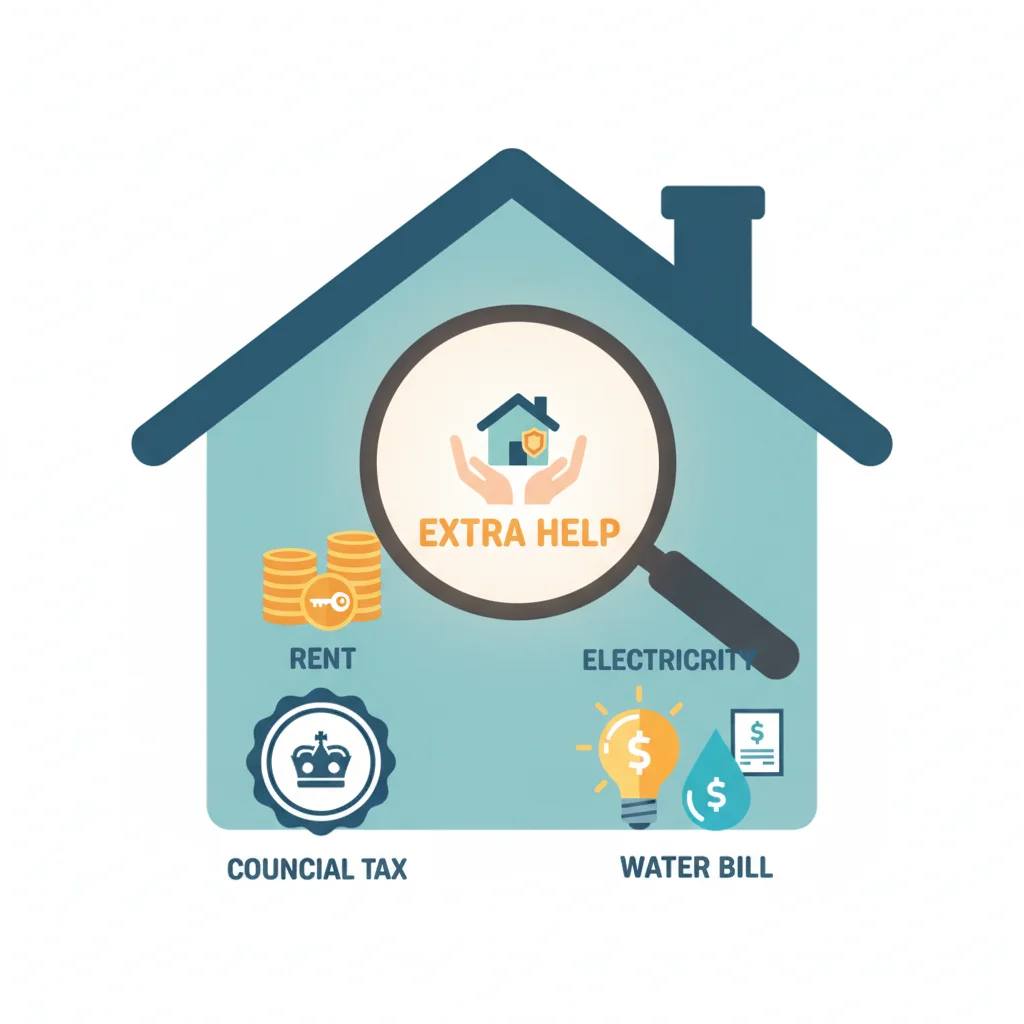
Discretionary Housing Payments: Your Guide to Council Support
Discretionary Housing Payments (DHPs) offer vital financial assistance from local councils for housing costs not covered by standard benefits. This guide explains eligibility, application processes, and how DHPs can provide crucial support when you need it most.
By: [email protected] on August 22, 2026
Última atualização em: agosto 24, 2026
Navigating the complex world of housing benefits can feel overwhelming, especially when your standard entitlements don’t quite cover your full housing costs. This is where Discretionary Housing Payments (DHPs) come into play, offering a crucial lifeline for many. Discretionary Housing Payments are extra payments made by your local council that can help you with housing costs, providing support beyond what your Universal Credit or Housing Benefit usually covers.
These payments are designed to offer a flexible, short-term solution to prevent homelessness, alleviate poverty, or support individuals during difficult financial periods. Understanding how DHPs work, who is eligible, and how to apply can make a significant difference in managing your housing expenses and maintaining stable accommodation.
Understanding Discretionary Housing Payments
Discretionary Housing Payments (DHPs) are an essential part of the UK’s welfare system, acting as a safety net for those facing a shortfall in their housing costs. Unlike standard benefits, which are typically determined by fixed rules and calculations, DHPs are awarded at the discretion of your local council. This means that each application is assessed on a case-by-case basis, taking into account your individual circumstances, income, and outgoings. Councils have a limited budget for DHPs each year, so they must carefully prioritise who receives these vital funds.
These payments can cover a variety of housing-related expenses that Universal Credit or Housing Benefit might not fully address. This includes situations where your benefit has been reduced due to the benefit cap, the bedroom tax (under-occupancy charge), or if your local housing allowance (LHA) rate doesn’t cover your full rent. They can also assist with rent arrears, rent deposits, or even moving costs, offering a broader scope of support than many people realise. The flexibility of DHPs allows councils to respond to unique and urgent housing needs within their community, providing tailored assistance where it’s most needed.
It’s important to remember that DHPs are generally not a long-term solution. They are typically awarded for a specific period, often a few months, to help you through a temporary financial difficulty or to give you time to find a more affordable housing solution. When your awarded period ends, you may need to reapply if your circumstances haven’t changed, or if you still require additional support. Councils often encourage applicants to use the period of DHP support to seek advice on budgeting, debt management, or finding alternative accommodation to ensure long-term financial stability.
Who is Eligible for Discretionary Housing Payments?
Eligibility for Discretionary Housing Payments hinges on a few key criteria, but the most fundamental is that you must already be receiving either Universal Credit (which includes a housing element) or Housing Benefit. Without one of these underlying benefits, your local council cannot consider you for a DHP. This ensures that DHPs are targeted at individuals and families who are already identified as needing assistance with their housing costs through the mainstream benefit system. The DHP is then designed to bridge any gap that remains after your standard benefit has been calculated.
Beyond receiving Universal Credit or Housing Benefit, the council will also assess your current financial situation in detail. They will look at your income, savings, and all your essential outgoings to determine if you genuinely have a shortfall in meeting your housing costs. This isn’t just about your rent; it could also include council tax arrears if you are liable for them, or even specific costs associated with moving into a new property. The council’s goal is to understand the full picture of your financial hardship and how a DHP could prevent further difficulties.
Councils also consider personal circumstances that might make it harder for you to manage your housing costs. This could include having a disability, caring responsibilities, significant health issues, or other vulnerabilities that impact your ability to earn or manage your finances. For example, if you have a child with special needs requiring a larger property, and your Housing Benefit doesn’t cover the full cost, a DHP could help. Each local authority will have its own policy on what specific criteria they prioritise, but generally, they aim to support the most vulnerable members of their community.
What Discretionary Housing Payments Can Cover
Discretionary Housing Payments are remarkably versatile in what they can cover, providing flexibility that standard benefits often lack. This adaptability is precisely what makes them so valuable for individuals and families facing unique financial pressures related to their housing. The primary purpose is to help with ongoing rent costs where Universal Credit or Housing Benefit doesn’t cover the full amount. This is a common scenario for those affected by the benefit cap, which limits the total amount of welfare benefits a household can receive, or the under-occupancy charge, often known as the ‘bedroom tax’, which reduces Housing Benefit if you’re deemed to have spare bedrooms.
Specific Areas of Support
Rent Shortfalls: If your Housing Benefit or Universal Credit housing element doesn’t meet your full rent, a DHP can bridge this gap, preventing arrears and potential eviction.
Rent Arrears: DHPs can be used to clear existing rent arrears, helping you avoid eviction and regain control of your finances. This is often a priority for councils seeking to prevent homelessness.
Rent Deposits and Rent in Advance: For those needing to move, DHPs can cover the upfront costs of a rent deposit or rent in advance, which are significant barriers for many low-income households.
Moving Costs: In some cases, DHPs can even assist with removal costs or other expenses directly associated with moving to a new, more affordable or suitable property.
It’s important to understand that DHPs cannot be used for all housing-related expenses. They cannot cover charges for services like heating, lighting, or hot water, nor can they pay for ineligible service charges within your rent. Additionally, DHPs cannot be used to cover any increase in rent due to sanctions or reductions in other benefits. The council will carefully review your application to ensure that the payment is used for eligible housing costs and that it will genuinely alleviate your financial hardship. They will also consider if the payment is a sensible use of public funds, often encouraging applicants to explore all other options.
How to Apply for Discretionary Housing Payments
Applying for Discretionary Housing Payments is a process that requires careful attention to detail and a clear understanding of your financial situation. The first step is always to contact your local council. Each council manages its own DHP scheme, so while the general principles are similar across the UK, the application form and specific evidence required may vary slightly. Most councils will have an application form available on their website, or you can request one directly from their housing or benefits department. It’s crucial to ensure you get the form from your specific local authority.
Once you have the application form, you’ll need to fill it out accurately and comprehensively. This typically involves providing detailed information about your income, savings, and all your household expenses. Be prepared to list everything from your weekly food budget to utility bills, travel costs, and any other regular outgoings. The council needs a full picture to understand your financial hardship. You will also need to explain why you need a DHP and how it will help you. This is your opportunity to highlight any special circumstances, such as health issues, caring responsibilities, or difficulties finding cheaper accommodation.
Alongside the application form, you will almost certainly be asked to provide supporting evidence. This usually includes proof of your identity, proof of your tenancy agreement, recent bank statements, payslips or benefit award letters, and any other documents that support your claim of financial difficulty or special circumstances. For example, if you’re claiming due to a medical condition, you might need to provide a doctor’s letter. Submitting all the required evidence promptly and clearly can significantly speed up the assessment process. If anything is missing, your application could be delayed or even rejected, so double-check everything before submission. Don’t hesitate to seek advice from your local council or an independent welfare rights advisor if you need help with the application.
Tips for a Successful DHP Application
Securing a Discretionary Housing Payment can make a real difference, but success often hinges on how well you present your case. The key is to be as thorough and honest as possible in your application. Start by gathering all necessary documentation before you begin filling out the form. This includes recent bank statements for all accounts, payslips or benefit award letters, proof of your rent and tenancy agreement, and any bills for essential outgoings. Having everything to hand will make the process smoother and reduce the chances of delays caused by missing information. Remember, the council needs to see a clear picture of your financial situation.
When completing the application form, clearly explain your circumstances and why you need the DHP. Don’t just state the facts; provide a narrative. For example, instead of just saying ‘I have rent arrears,’ explain why you have arrears, perhaps due to an unexpected expense, a delay in benefit payments, or a change in your household income. Highlight any exceptional circumstances that make your situation particularly challenging, such as health problems, disabilities, or caring responsibilities. The more detail you can provide about your unique situation, the better the council can understand your need for support.
It’s also advisable to demonstrate that you are actively trying to improve your financial situation. This could involve showing that you are looking for work, seeking debt advice, or trying to find more affordable accommodation. Councils are more likely to award DHPs to applicants who are taking proactive steps to manage their finances and address their housing issues in the long term. If your application is initially refused, don’t give up. You usually have the right to ask for a reconsideration or an appeal. Seek independent advice from a welfare rights organisation or Citizens Advice if you need help challenging a decision.
Frequently Asked Questions
Q: How long does it take to get a decision on a DHP application?
A: The timeframe for a decision can vary between local councils, but they should aim to process applications within a reasonable period. It’s best to check with your specific council for their estimated processing times. Some councils may prioritise urgent cases.
Q: Can Discretionary Housing Payments be paid directly to my landlord?
A: Yes, in many cases, DHPs can be paid directly to your landlord, especially if they are helping to clear rent arrears or prevent eviction. This can provide reassurance to both you and your landlord.
Q: Is there a limit to how much DHP I can receive?
A: There isn’t a fixed national limit for individual DHP awards. However, councils have a limited budget for DHPs each year, and the amount you receive will depend on your circumstances, the council’s policy, and the available funds. It cannot exceed your eligible housing costs.
Q: What if my circumstances change after I’ve received a DHP?
A: You should always inform your local council immediately if there are any changes to your income, household, or housing costs. This is important because it could affect your entitlement to the DHP, and failure to report changes could lead to overpayment.
Q: Can I apply for a DHP if I only need help with my Council Tax?
A: Yes, Discretionary Housing Payments can sometimes be used to help with Council Tax arrears if you are liable for them and receiving Housing Benefit or the housing element of Universal Credit. You should specify this in your application.
Discretionary Housing Payments stand as a vital support mechanism within the UK’s benefit system, offering a flexible and essential lifeline for individuals and families struggling with housing costs. While not a permanent solution, these payments from local councils can bridge critical financial gaps, preventing homelessness, clearing arrears, and facilitating moves to more suitable accommodation. Understanding their purpose, eligibility criteria, and the application process is crucial for anyone facing a shortfall in their housing benefit or Universal Credit.
By diligently preparing your application, providing comprehensive evidence, and clearly articulating your personal circumstances, you significantly increase your chances of receiving this much-needed support. Remember, DHPs are designed to be discretionary, meaning your local council has the power to make a positive difference in your life based on your unique situation. Don’t hesitate to explore this option if you find yourself struggling to meet your housing expenses; it could be the key to maintaining stability and securing your home.
Peter B holds a degree in Journalism and has 5 years of experience covering U.S. economic policy, labor markets, and financial news. He writes data-driven news content on topics like inflation, interest rates, and employment trends.