Pension Credit Explained: Don’t Miss Out on UK Benefits
Pension Credit is a crucial UK benefit designed to top up the income of retirees. Many eligible individuals miss out. This guide explains who qualifies, how to apply, and the potential financial boost, helping you secure the support you deserve.
By: [email protected] on August 22, 2026
Última atualização em: agosto 24, 2026
Pension Credit Explained: Could You Be Missing Out on Up to £3,500 Annually?
Many older people in the UK are currently missing out on a vital benefit known as Pension Credit UK. This often-overlooked financial support could significantly boost your retirement income, potentially adding up to £3,500 to your annual budget. Understanding Pension Credit UK and how it works is crucial for ensuring you receive all the financial assistance you are entitled to in your later years.
Pension Credit is designed to provide a safety net, topping up your weekly income if it falls below a certain threshold. It’s not just for those on the lowest incomes; many people with modest savings or a small private pension may also be eligible. This guide will walk you through the intricacies of Pension Credit, helping you determine if you qualify and how to navigate the application process.
What Exactly is Pension Credit UK and Who Qualifies?
Pension Credit UK is a means-tested benefit, meaning your eligibility depends on your income and savings. It’s crucial to understand that this benefit is separate from your State Pension, and you can receive both. The main goal of Pension Credit is to ensure that everyone over State Pension age has a guaranteed minimum income, preventing poverty in old age. While it might seem complex at first glance, breaking down the eligibility criteria makes it much clearer for potential applicants.
To qualify for Pension Credit, you must have reached State Pension age. For couples, both partners must have reached State Pension age, or one partner must be receiving Housing Benefit for people over State Pension age. Your total weekly income is then assessed against a government-set threshold. This income includes your State Pension, any private pensions, earnings from employment, and most other benefits. Savings are also taken into account, though there are specific rules about how these are treated.
It’s a common misconception that having some savings or a small private pension automatically disqualifies you. In reality, many people with modest assets still find themselves eligible for some level of Pension Credit. The benefit is calculated to bring your total weekly income up to a minimum amount, which can be a significant help in covering daily living costs. Don’t assume you won’t qualify; it’s always worth checking your potential eligibility, as even a small amount of Pension Credit can unlock other benefits.
The rules around savings are particularly important. If you have savings over a certain amount, usually £10,000, then for every £500 (or part of £500) above that threshold, £1 a week is added to your income calculation. This doesn’t mean your savings are directly reduced; it’s just a notional amount used to determine your eligibility. This calculation ensures that those with substantial savings contribute to their own living costs, while still providing support to those who need it most. Many people are surprised to learn they still qualify despite having some money put aside for a rainy day.
Understanding the Two Parts of Pension Credit: Guarantee and Savings Credit
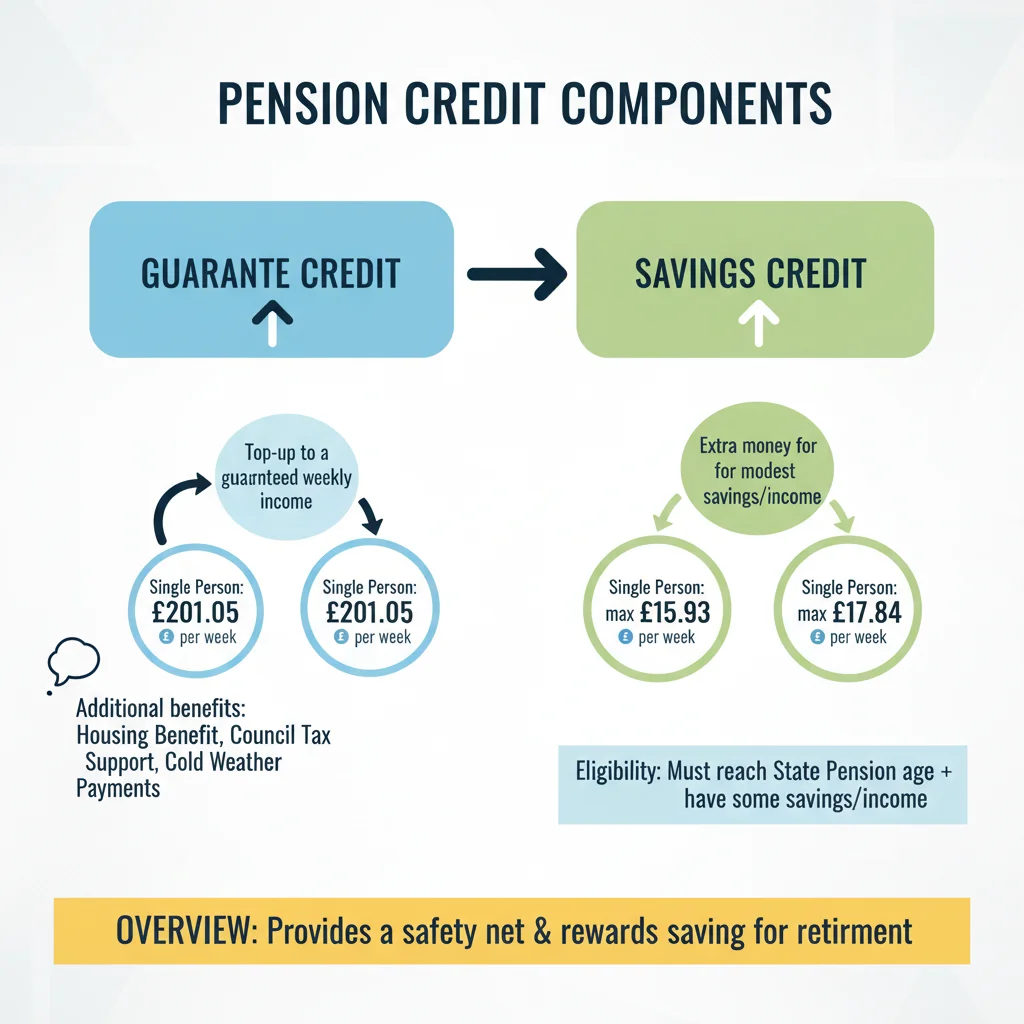
Pension Credit UK is generally divided into two main components: Guarantee Credit and Savings Credit. It’s important to understand the difference between these two, as your eligibility for each depends on different factors and they serve distinct purposes. Most applicants will primarily be assessed for Guarantee Credit, which is the more widely applicable part of the benefit, but Savings Credit can also provide a valuable boost for those who have planned for their retirement.
Guarantee Credit Explained
Income Top-Up: Guarantee Credit tops up your weekly income to a guaranteed minimum level. For single people, this is a set amount, and for couples, it’s a higher combined amount. This is the primary component of Pension Credit and ensures that no one lives below a basic income threshold in retirement.
Eligibility Basis: Your eligibility for Guarantee Credit is based on your current income and certain capital thresholds. If your income falls below the guaranteed minimum, Guarantee Credit makes up the difference.
Additional Payments: You might receive extra amounts on top of your Guarantee Credit if you have specific responsibilities, such as severe disability, or if you are a carer. These additions can further increase the amount of support you receive.
Unlocking Other Benefits: Receiving Guarantee Credit automatically qualifies you for other important benefits, like help with housing costs (e.g., Housing Benefit), Council Tax Reduction, a free TV Licence if you’re over 75, and help with NHS costs. This aspect alone makes checking your eligibility incredibly worthwhile.
Savings Credit is designed to reward people who have saved some money for their retirement, even if it’s a modest amount. It’s a smaller top-up that is available to those who reached State Pension age before a specific date (currently 6 April 2016). If you reached State Pension age on or after this date, you cannot get Savings Credit unless you are part of a couple and your partner reached State Pension age before this date and was already getting Savings Credit.
The amount of Savings Credit you can receive depends on how much your weekly income is above the basic State Pension but below a certain higher threshold. It essentially provides a small bonus for those who have made an effort to save for their retirement, ensuring that their efforts aren’t entirely offset by a reduction in benefits. While often a smaller amount than Guarantee Credit, it can still contribute meaningfully to your overall financial well-being.
The Application Process: How to Claim Your Pension Credit UK
Applying for Pension Credit UK might seem like a daunting task, but the process is designed to be as straightforward as possible, with various channels available to suit your preferences. It’s important not to delay your application, as payments can sometimes be backdated, meaning you could receive money for periods before your claim was officially processed. Gathering the necessary information before you start will make the entire process much smoother and less stressful.
The primary way to apply is by phone. The Pension Service has a dedicated helpline where trained advisors can guide you through the application, ask the relevant questions, and even fill out the form on your behalf. This can be particularly helpful if you’re not comfortable with online forms or prefer speaking directly to someone. They can also offer advice on what documents you might need and answer any questions you have about your specific circumstances. It’s often the quickest and most direct route to getting your application started.
Alternatively, you can apply online using the government’s official website. The online application form is comprehensive and allows you to fill in your details at your own pace. You’ll need access to a computer or tablet and a reliable internet connection. The online service is secure and provides clear instructions at each step. For those who are tech-savvy, this can be a convenient way to submit your application from the comfort of your own home, without needing to make a phone call during specific hours. Make sure you have all your financial details handy when you begin.
If you prefer a paper application, you can request a form to be sent to you by post. This option is suitable for those who prefer to fill out forms by hand and mail them back. While it might take a little longer due to postal times, it offers flexibility. Regardless of the method you choose, you will need to provide details about your income, savings, and any benefits you currently receive. Having bank statements, pension statements, and details of any other income readily available will significantly speed up the process. Don’t forget that even if you’re unsure about your eligibility, applying is the only way to find out for certain.
What Documents and Information Will You Need?
When you apply for Pension Credit UK, whether by phone, online, or by post, you will need to provide certain documents and information to support your claim. Having these ready before you start will make the application process much smoother and help prevent delays. The Department for Work and Pensions (DWP) needs this information to accurately assess your eligibility and calculate the amount of Pension Credit you could receive. It’s essentially about proving your identity, your age, and your financial situation.
Firstly, you’ll need personal identification details. This includes your National Insurance number, which is essential for any benefit claim in the UK. You’ll also need your date of birth, current address, and details of any partners if you are applying as a couple. Having these basic pieces of information at hand is the starting point for any application. It ensures that your claim is correctly linked to your personal record within the benefits system, preventing any mix-ups or delays.
Secondly, comprehensive financial information is critical. This involves details of all your income sources. You’ll need to provide information on your State Pension, any private or workplace pensions you receive, and any other benefits you might be getting, such as Attendance Allowance or Disability Living Allowance. If you have any earnings from employment, even part-time or casual work, you’ll need to declare these too. It’s important to be as accurate as possible, as any discrepancies could lead to delays or further inquiries from the DWP.
Finally, details of your savings and investments are also required. This includes bank and building society accounts, ISAs, premium bonds, and any other capital you hold. While small amounts of savings are often disregarded, it’s still important to declare everything accurately. You may also need to provide details of any property you own (excluding your main home) or any other assets. The DWP uses this information to determine your overall financial position and calculate your eligibility for both Guarantee Credit and Savings Credit. Gathering all this together before you start will make the application less stressful and more efficient.
The Wider Benefits: Why Pension Credit UK is More Than Just an Income Boost
While the primary purpose of Pension Credit UK is to top up your income, its benefits extend far beyond a simple financial boost. Receiving Pension Credit, particularly the Guarantee Credit component, acts as a gateway to a range of other valuable support and concessions that can significantly improve your quality of life and reduce your household expenses. Many people are unaware of these additional advantages, making it even more important to check your eligibility for this crucial benefit. These extra benefits can collectively be worth hundreds, if not thousands, of pounds annually.
One of the most significant additional benefits is help with housing costs. If you receive Guarantee Credit, you are often automatically entitled to Housing Benefit, which can cover all or part of your rent. This can be a huge relief for renters, freeing up a substantial portion of their income. Similarly, you’ll likely qualify for a Council Tax Reduction, which can significantly lower your annual Council Tax bill. These two benefits alone can make a substantial difference to your monthly outgoings, making your retirement income stretch further.
Beyond housing, Pension Credit opens doors to support with everyday living expenses. If you are over 75 and receive Guarantee Credit, you are entitled to a free TV Licence. This might seem like a small detail, but it’s another saving that adds up over the year. Furthermore, you will usually qualify for help with NHS costs, including free prescriptions, free dental treatment, and free sight tests. This can be particularly beneficial for older individuals who may have more frequent medical needs, reducing the financial burden of healthcare. These health-related savings can provide immense peace of mind.
The impact of Pension Credit also extends to energy costs. Recipients are often eligible for the Warm Home Discount Scheme, which provides a discount on electricity bills during the winter months. This is a vital support for keeping homes warm and comfortable without excessive financial strain. There are also potential discounts on water bills and other utilities, depending on your local provider and specific circumstances. In essence, Pension Credit acts as a key that unlocks a comprehensive package of support, designed to ensure older people can live comfortably and with dignity in their retirement years. It’s truly a foundational benefit that offers much more than just an income top-up.
Common Misconceptions and How to Overcome Them
Despite its significant benefits, many eligible individuals do not claim Pension Credit UK due to various misconceptions or perceived barriers. It’s vital to address these common misunderstandings to encourage more people to apply for the support they are entitled to. Overcoming these barriers often involves simply understanding the facts and realizing that the process is more accessible than many believe.
One prevalent misconception is that Pension Credit is only for those with no savings at all. As discussed earlier, this is not true. While savings are considered, there are thresholds and calculations that mean many people with modest savings still qualify. It’s not an all-or-nothing situation; even if your savings are above the initial threshold, you might still be eligible for some amount of Pension Credit. Don’t let the fear of having ‘too much’ savings deter you from investigating your eligibility.
Another common belief is that claiming benefits is complicated, embarrassing, or carries a stigma. The government has made efforts to simplify the application process, offering phone, online, and postal options. Furthermore, Pension Credit is a legitimate entitlement designed to support older citizens; there is no shame in claiming what is rightfully yours. It’s a fundamental part of the welfare system, ensuring a basic standard of living for retirees. Many organisations also offer free and confidential help with applications, removing the burden from individuals.
Finally, some people mistakenly believe that Pension Credit will negatively impact other benefits they receive. In most cases, the opposite is true. Receiving Guarantee Credit often acts as a passport to additional benefits and discounts, as outlined in the previous section. Far from jeopardizing other support, it often enhances it. It’s crucial to look at Pension Credit not in isolation, but as a foundational benefit that can unlock a wider network of financial and practical assistance, ensuring a more secure and comfortable retirement. Don’t let these common myths prevent you from exploring your entitlement.
Frequently Asked Questions
Q: Can I get Pension Credit if I own my home?
A: Yes, owning your home does not affect your eligibility for Pension Credit. The value of your main home is not considered as part of your capital when assessing your claim.
Q: How often is Pension Credit paid?
A: Pension Credit is typically paid weekly directly into your bank, building society, or Post Office account. This regular payment helps you manage your weekly budget effectively.
Q: What happens if my circumstances change after I apply?
A: You must report any changes in your circumstances, such as changes to your income, savings, or if someone moves in or out of your household, to the Pension Service as soon as possible. This ensures you receive the correct amount of benefit.
Q: Is Pension Credit taxable?
A: No, Pension Credit is a tax-free benefit. The amount you receive will not be included in your taxable income, meaning you get to keep the full amount of the top-up.
Q: Can I still work and receive Pension Credit?
A: Yes, you can still work and receive Pension Credit. Earnings from employment are taken into account when calculating your benefit, but having some earnings does not automatically disqualify you.
Pension Credit UK is a vital, yet often unclaimed, benefit designed to provide essential financial support to older people. Far too many eligible individuals are missing out on this crucial income top-up, which could amount to thousands of pounds annually and unlock a host of other valuable concessions. From ensuring a guaranteed minimum income to providing access to help with housing costs, Council Tax, free TV Licences, and NHS support, the comprehensive benefits of Pension Credit are undeniable.
Don’t let misconceptions about savings or the application process deter you. The government has made efforts to simplify claiming Pension Credit, offering support via phone, online, and post. Taking the time to understand the eligibility criteria and gathering the necessary documents could significantly improve your financial well-being in retirement. We strongly encourage anyone who thinks they might qualify to check their entitlement and apply. Claiming Pension Credit is not just about a financial boost; it’s about securing the dignity and peace of mind you deserve in your later years. Take that crucial step today and ensure you’re not missing out on the support that’s rightfully yours.
Peter B holds a degree in Journalism and has 5 years of experience covering U.S. economic policy, labor markets, and financial news. He writes data-driven news content on topics like inflation, interest rates, and employment trends.