Maximising Child Benefit Claims: New £60,000 Income Threshold
The UK's Child Benefit income threshold has increased to £60,000, impacting many families. This guide helps you understand the changes, how to maximise your Child Benefit claims, and navigate the High Income Child Benefit Charge effectively.
By: pedropadm2025@gmail.com on August 22, 2026
Última atualização em: agosto 24, 2026
Maximising Your Child Benefit Claims: Understanding the Updated Income Threshold of £60,000
For many families across the UK, Child Benefit provides crucial financial support, helping with the costs of raising children. The rules around who qualifies for the full amount, or any amount at all, have often been a source of confusion, particularly concerning income limits. We are now seeing significant changes, with the income threshold for Child Benefit claims increasing to £60,000, a move that could positively impact thousands of households.
Understanding these updates is essential for ensuring you receive all the support you’re entitled to. This article will break down the new threshold, explain how the High Income Child Benefit Charge (HICBC) works, and offer practical advice on navigating these changes to maximise your Child Benefit claims.
The New £60,000 Income Threshold Explained
The recent adjustment to the High Income Child Benefit Charge (HICBC) threshold marks a significant policy shift. Previously, families faced a reduction in their Child Benefit when one parent earned over £50,000. This threshold has now been raised to £60,000, meaning more families will be able to receive the full Child Benefit amount without any deductions. This change is designed to alleviate some of the financial pressure on middle-income households, acknowledging the rising cost of living.
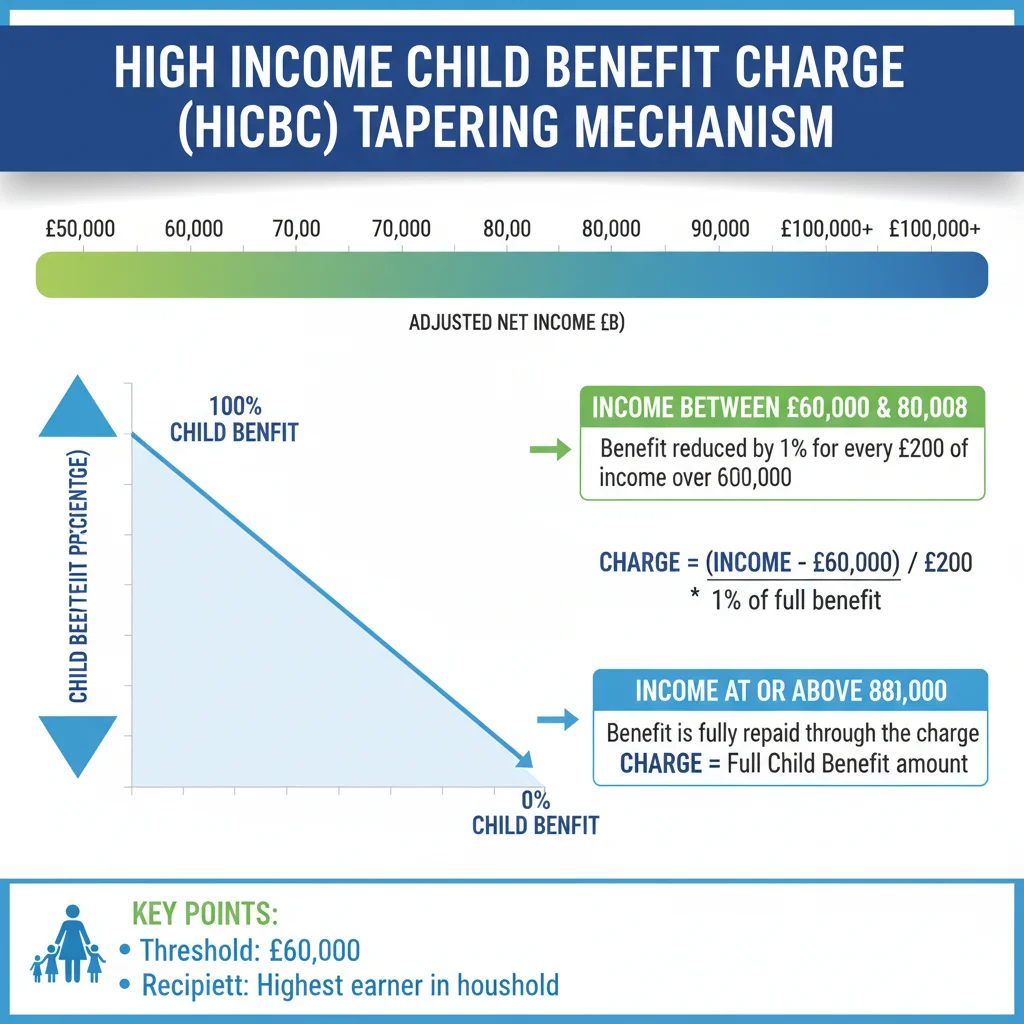
Beyond the initial threshold, the rate at which the benefit is withdrawn has also been adjusted. The previous system saw the benefit fully withdrawn once one parent earned £60,000. Under the new rules, the Child Benefit will not be fully withdrawn until one parent earns £80,000. This extended taper rate provides a longer window for families to retain some of their Child Benefit, even if their income is above the initial £60,000 mark. These changes aim to make the system fairer and more responsive to current economic realities.
It’s important to remember that the HICBC is based on the income of the highest earner in a household, not the combined income. This detail often causes confusion, but it’s a key factor in determining how much Child Benefit a family ultimately receives. The government expects these changes to benefit around half a million families, offering a welcome boost to household budgets. Families who previously opted out of Child Benefit due to the old threshold may now find themselves eligible for at least a partial payment, making it worthwhile to re-evaluate their entitlement.
Who is Affected by the High Income Child Benefit Charge?
The High Income Child Benefit Charge (HICBC) applies to individuals who receive Child Benefit, or whose partner receives it, and whose adjusted net income is over a certain amount. With the new threshold, this means individuals earning over £60,000 will be affected. The charge effectively claws back some or all of the Child Benefit received, ensuring that higher-earning families contribute more towards the cost of the benefit. It’s crucial for affected individuals to understand how this charge works to avoid unexpected tax bills.
The charge increases gradually as income rises. For every £200 earned over £60,000, 1% of the Child Benefit is repaid through a self-assessment tax return. This tapering continues until the individual’s income reaches £80,000, at which point the entire Child Benefit amount is repaid. This system ensures a smooth reduction rather than a sudden cliff edge, but it still requires careful attention from those in the affected income bracket. Many families might not realise they are subject to this charge until they receive a tax demand.
It’s important to note that even if you choose not to receive Child Benefit payments due to the HICBC, it is often still beneficial to claim it. Claiming Child Benefit ensures that you receive National Insurance credits, which count towards your State Pension entitlement. This is particularly important for parents who are not working or are on low incomes, as these credits protect their future pension. Therefore, understanding the HICBC isn’t just about the immediate financial impact, but also about long-term financial planning.
Navigating the High Income Child Benefit Charge
Understanding and managing the High Income Child Benefit Charge (HICBC) can seem daunting, but with the right approach, you can navigate it effectively. The first step is to accurately calculate your adjusted net income. This isn’t just your salary; it includes other forms of income like rental income, dividends, and interest, minus certain deductions such as Gift Aid donations or pension contributions. Getting this figure right is fundamental to knowing where you stand in relation to the £60,000 and £80,000 thresholds.
If your adjusted net income, or that of your partner, is over £60,000, you have a few options. You can continue to receive the Child Benefit payments and pay the HICBC through a Self Assessment tax return. Alternatively, you can opt out of receiving the payments altogether, thereby avoiding the need to pay the charge. However, as mentioned, even if you opt out of payments, it’s usually advisable to still complete the Child Benefit claim form to ensure you receive National Insurance credits, especially if you have children under 12.
Strategies to Reduce Your Adjusted Net Income
Pension Contributions: Increasing your pension contributions can be an effective way to reduce your adjusted net income. Contributions to a personal pension scheme, for example, are deducted from your total income before the HICBC is calculated, potentially lowering your income below a threshold or reducing the amount of the charge.
Gift Aid Donations: Making donations to charities under the Gift Aid scheme can also reduce your adjusted net income. The gross value of your donation (your donation plus the reclaimed basic rate tax) is deducted from your income for HICBC purposes.
Salary Sacrifice Schemes: If your employer offers salary sacrifice schemes for things like childcare vouchers or cycle-to-work schemes, participating in these can lower your taxable income, which in turn reduces your adjusted net income.
Careful planning around these options can significantly impact your net income and, consequently, the amount of HICBC you might owe, helping you to maximise your Child Benefit claims.
Maximising Your Child Benefit Claims: Practical Steps
To truly maximise your Child Benefit claims, it’s essential to take proactive steps and review your financial situation regularly. The first and most crucial step is to ensure you actually claim Child Benefit, even if you anticipate the High Income Child Benefit Charge will apply. As discussed, claiming secures National Insurance credits, which are vital for your State Pension entitlement, particularly if one parent is not working or earns below the National Insurance threshold.
Once claimed, keep a close eye on your income and your partner’s income. Life circumstances change, and what was true last year might not be true this year. A promotion, a new job, or even a change in working hours could push an individual’s income over the £60,000 threshold, or further into the HICBC taper. Regularly reviewing pay slips and other income sources will help you stay informed and prepared for any adjustments needed.
Consider the timing of certain financial decisions. For example, if you are close to the £60,000 or £80,000 thresholds, making additional pension contributions towards the end of the tax year could bring your adjusted net income down. This strategic planning can sometimes be the difference between paying a significant HICBC and paying a reduced amount, or even avoiding it altogether. Always consult with a financial advisor if you are unsure about the best course of action for your specific circumstances, especially when dealing with complex income structures.
Future Outlook and Potential Further Changes
The recent adjustments to the Child Benefit income threshold represent a significant change, but they might not be the last. The government continuously reviews its welfare policies and tax frameworks, especially in response to economic shifts and public feedback. While specific future changes are never guaranteed, it’s prudent for families to remain aware of potential policy discussions and proposals that could impact Child Benefit claims further down the line. These discussions often centre on making the system fairer, simpler, or more targeted.
One area of ongoing debate is whether the HICBC should be based on household income rather than individual income. Critics of the current system argue that it unfairly penalises single-earner households compared to two-earner households with the same combined income. While there are no immediate plans to change this, it remains a topic of discussion among policymakers and advocacy groups. Any shift to a household income basis would fundamentally alter how the HICBC is calculated and who is affected.
Another potential area for review could be the indexation of the thresholds themselves. Currently, the thresholds are not automatically adjusted for inflation, meaning that over time, more families could be drawn into the HICBC as wages increase. Regular indexation would ensure the thresholds remain relevant to contemporary earnings. Staying informed through official government announcements and reputable financial news sources will be key to understanding any further developments that could affect your Child Benefit claims and overall family finances.
Frequently Asked Questions
What is the new income threshold for Child Benefit?
The new income threshold for the High Income Child Benefit Charge (HICBC) is £60,000. If one parent or guardian earns over this amount, they may be subject to the charge.
How does the High Income Child Benefit Charge (HICBC) work?
For every £200 earned over £60,000 by the highest earner in a household, 1% of the Child Benefit received is repaid through a Self Assessment tax return. The benefit is fully withdrawn once an individual’s income reaches £80,000.
Should I still claim Child Benefit if I expect to pay the HICBC?
Yes, it’s generally advisable to still claim Child Benefit. Even if you pay back the full amount via the HICBC, claiming ensures you receive National Insurance credits, which contribute towards your State Pension entitlement, especially for non-working parents.
Can I reduce my adjusted net income to avoid the HICBC?
Yes, you can reduce your adjusted net income by making pension contributions or Gift Aid donations. These deductions are subtracted from your total income before the HICBC is calculated, potentially lowering the charge or avoiding it entirely.
What if my income fluctuates above and below the threshold?
If your income fluctuates, you will need to declare your actual adjusted net income each tax year through a Self Assessment tax return. This will determine the exact amount of HICBC you owe for that specific year, so careful record-keeping is essential.
The recent increase in the Child Benefit income threshold to £60,000, and the adjusted taper rate extending up to £80,000, represents a significant and welcome change for many UK families. These adjustments offer a greater opportunity for households to maximise their Child Benefit claims, providing much-needed financial support in an evolving economic landscape. Understanding the intricacies of the High Income Child Benefit Charge (HICBC) is no longer just for a select few; it’s a vital piece of knowledge for any family navigating these benefits.
By taking proactive steps such as accurately calculating adjusted net income, exploring strategies to reduce taxable earnings through pension contributions or charitable giving, and consistently reviewing your financial situation, you can ensure you are making the most of the available support. Even if you anticipate paying the HICBC, claiming Child Benefit remains crucial for securing valuable National Insurance credits towards your State Pension. The landscape of family benefits is dynamic, and staying informed through official channels is paramount. Don’t let confusion lead to missed opportunities; empower yourself with this knowledge to secure your family’s financial well-being.
pedropadm2025@gmail.com
Peter B holds a degree in Journalism and has 5 years of experience covering U.S. economic policy, labor markets, and financial news. He writes data-driven news content on topics like inflation, interest rates, and employment trends.