Navigating New Apprenticeship Levy Rules: UK Business Guide
This article explores the significant changes to apprenticeship levy rules affecting UK businesses. We break down the key updates, funding mechanisms, and practical strategies to help employers navigate these regulations effectively for workforce development.
By: Michael Sete on August 22, 2026
Última atualização em: agosto 24, 2026
Navigating the ever-evolving landscape of UK business regulations can be a complex task, especially when it comes to workforce development and funding. The apprenticeship levy rules are a critical area that many UK businesses must understand to optimize their training investments and comply with current legislation. These rules, designed to fund apprenticeship training, have seen various adjustments since their introduction, and staying informed about the latest changes is essential for strategic planning and talent development.
Understanding the nuances of the apprenticeship levy rules can directly impact a company’s ability to upskill its workforce, recruit new talent, and utilize available government funding effectively. This article will delve into the significant updates and provide a clear overview of what these changes mean for your organization, helping you to confidently navigate the current requirements and leverage the opportunities they present.
Understanding the Apprenticeship Levy Mechanism
The apprenticeship levy is a tax on UK employers that was introduced in April 2017. Its primary purpose is to fund new apprenticeships, aiming to boost skills and productivity across the country. Employers with an annual pay bill exceeding £3 million are required to pay 0.5% of their total pay bill into the levy. This payment is then collected by HMRC through the PAYE system. Once paid, these funds are accessible through an online account, often referred to as the ‘Apprenticeship Service account’, where businesses can manage their levy funds and spend them on approved apprenticeship training and assessment.
It’s important to remember that not all employers pay the levy. Smaller businesses, those with a pay bill below £3 million, do not directly contribute to the levy. However, they can still benefit from government support for apprenticeships, often receiving 95% of the training costs covered by the government, with the employer contributing the remaining 5%. This distinction is crucial for understanding how different businesses access and utilize apprenticeship funding. The levy is designed to create a sustainable funding model, ensuring a continuous investment in the UK’s skills base, and its structure reflects a commitment to developing a skilled workforce for future economic growth.
The funds in an employer’s apprenticeship service account have an expiry date. Levy funds expire 24 months after they enter the account if they are not spent. This ‘use it or lose it’ policy encourages businesses to plan their apprenticeship strategies carefully and make timely investments in training. Unspent funds are then returned to the government for broader apprenticeship funding. This mechanism underscores the importance of proactive engagement with apprenticeship programs, ensuring that businesses not only comply with the levy but also maximize the return on their investment in skills development. Understanding this expiry rule is fundamental for effective financial planning around apprenticeship initiatives.
Key Change 1: Expanded Scope of Levy Usage
One of the most significant adjustments to the apprenticeship levy rules involves the expanded scope of how businesses can use their levy funds. Initially, the rules were quite prescriptive, limiting the use of funds almost exclusively to direct apprenticeship training and assessment costs. This often led to unspent funds for many businesses, as their specific training needs didn’t always align perfectly with the available apprenticeship standards. The government has recognized this challenge and has been working to introduce greater flexibility, allowing employers to utilize their levy contributions more broadly to support their workforce development goals. This shift reflects a move towards empowering businesses with more control over their investment in skills, making the levy a more versatile tool for talent management.
The expanded scope now allows for a portion of levy funds to be transferred to other businesses, particularly those in an employer’s supply chain or to smaller businesses that might struggle to afford apprenticeship training on their own. This transfer mechanism enables larger levy-paying companies to support the wider ecosystem, fostering skills development across various sectors and helping to address skill gaps more strategically. This flexibility not only benefits the recipient businesses by providing access to crucial training funds but also allows the transferring employer to demonstrate corporate social responsibility and strengthen their supply chain relationships. It’s a win-win scenario that promotes collaborative skills investment.
Furthermore, discussions and pilot programs have explored allowing levy funds to be used for a wider range of skills training, beyond just formal apprenticeships. While not fully implemented across the board, the direction of travel indicates a desire to make the levy a more adaptable funding source for various forms of upskilling and reskilling. This could include shorter, modular courses or professional development programs that address immediate business needs. Such changes would transform the levy from a purely apprenticeship-focused fund into a broader skills development fund, offering businesses greater agility in responding to market demands and technological advancements. Keeping abreast of these evolving discussions is vital for future strategic planning.
Key Change 2: Funding Band Adjustments and Eligibility
Another crucial area of change within the apprenticeship levy rules concerns the funding bands and eligibility criteria for various apprenticeship standards. The government regularly reviews and adjusts the maximum amount of levy funds that can be used for each apprenticeship standard. These funding bands are designed to reflect the true cost of delivering quality training for specific roles and industries. When a funding band is adjusted, it directly impacts how much an employer can claim from their levy account for a particular apprenticeship, making it essential for businesses to stay informed about the latest band values before committing to new training programs. These adjustments aim to ensure fair pricing and value for money in apprenticeship provision.
Eligibility criteria for both apprentices and employers also see periodic updates. For instance, there can be changes to the minimum duration of an apprenticeship, the required off-the-job training hours, or the prior learning rules for individuals. Employers must ensure that both their chosen apprenticeship programs and their prospective apprentices meet all current eligibility requirements to draw down levy funds successfully. Failure to comply with these criteria can result in funding being withheld or clawed back, leading to unexpected costs for the business. Therefore, a thorough understanding of these updated eligibility rules is paramount for smooth program implementation and financial stability.
These adjustments often reflect shifts in industry needs, technological advancements, and government priorities for skills development. For example, new apprenticeship standards might be introduced for emerging digital roles, or existing standards might be updated to include new technologies. Similarly, eligibility for certain age groups or prior qualifications might be refined to target specific demographics or address particular skill shortages. Businesses should regularly consult the official government guidance and the Apprenticeship Service website to access the most current information on funding bands and eligibility, ensuring their apprenticeship strategies remain compliant and financially viable. Proactive engagement with these updates can unlock significant funding opportunities and streamline recruitment processes.
Key Change 3: Increased Focus on Quality and Outcomes
The third significant evolution in the apprenticeship levy rules is a heightened emphasis on the quality of apprenticeship training and the measurable outcomes for apprentices and businesses alike. The government is increasingly focused on ensuring that levy funds are invested in high-quality programs that genuinely equip individuals with valuable skills and lead to tangible career progression. This focus means that training providers are under greater scrutiny to deliver excellent provision, and employers are encouraged to select providers with a proven track record of success. The aim is to move beyond simply filling apprenticeship quotas and instead concentrate on creating highly skilled, productive employees who contribute meaningfully to the economy.
This push for quality manifests in several ways. There is a stronger emphasis on the ‘end-point assessment’ (EPA), which is an independent assessment of an apprentice’s knowledge, skills, and behaviors at the end of their program. The results of the EPA are critical indicators of the apprenticeship’s effectiveness. Employers are encouraged to engage actively with their training providers to ensure that the curriculum is robust, relevant, and prepares apprentices thoroughly for their EPA. Furthermore, Ofsted inspections of apprenticeship providers are becoming more rigorous, with results publicly available, allowing employers to make informed choices about their training partners. This transparency helps businesses to identify and partner with the best providers.
The focus on outcomes also extends to the long-term impact of apprenticeships. Businesses are now more encouraged to track how apprentices progress within their organizations after completing their programs. This data helps to demonstrate the return on investment for apprenticeship training and provides valuable insights into the effectiveness of different standards and providers. For employers, this means thinking beyond the immediate training period and considering how apprenticeships integrate into their broader talent management and succession planning strategies. By prioritizing quality and outcomes, the updated apprenticeship levy rules aim to foster a culture of continuous improvement in skills development, ultimately benefiting both individuals and the UK economy.
Strategic Implementation for UK Businesses
Successfully navigating the updated apprenticeship levy rules requires a strategic approach from UK businesses. It’s no longer enough to simply pay the levy; companies must actively engage with the system to maximize its benefits and ensure compliance. A well-thought-out strategy begins with a thorough audit of current and future skills needs within the organization. This involves identifying specific roles where apprenticeships could address skill gaps, enhance existing capabilities, or support succession planning. Understanding these needs is the first step in aligning apprenticeship programs with broader business objectives, turning the levy from a cost into a strategic investment. Proactive planning ensures that levy funds are spent effectively and yield tangible returns for the business.
Once needs are identified, businesses should carefully research and select appropriate apprenticeship standards and training providers. Given the increased focus on quality and outcomes, choosing a reputable provider with a strong track record and relevant industry expertise is paramount. Engaging in open communication with potential providers to understand their curriculum, delivery methods, and support for apprentices is crucial. Businesses should also explore the possibility of transferring unspent levy funds to other organizations, particularly those within their supply chain, to foster collaborative skills development and strengthen partnerships. This not only benefits smaller businesses but can also enhance the transferring company’s reputation and contribute to a more skilled wider workforce.
Optimizing Levy Fund Utilisation
Conduct Regular Skills Audits: Continuously assess your workforce’s skills gaps and future training requirements to identify where apprenticeships can add the most value.
Engage with Training Providers: Establish strong relationships with high-quality training providers to ensure programs meet your specific business needs and deliver excellent outcomes.
Explore Levy Transfer Options: Consider transferring a portion of your unspent levy funds to support smaller businesses or those in your supply chain, fostering broader skills development.
Monitor Fund Expiry Dates: Keep a close eye on your Apprenticeship Service account to track fund expiry dates and plan your apprenticeship investments accordingly, avoiding loss of funds.
Integrate Apprenticeships into HR Strategy: Embed apprenticeship programs into your overall HR and talent development strategy, viewing them as a core component of long-term workforce planning.
By taking these strategic steps, UK businesses can transform their apprenticeship levy obligations into opportunities for growth, innovation, and sustainable talent development. The new rules, with their added flexibility and focus on quality, offer a powerful mechanism for building a highly skilled and adaptable workforce capable of meeting future challenges.
Future Outlook and Adaptability for Businesses
Looking ahead, the apprenticeship levy rules are likely to continue evolving, reflecting the dynamic nature of the UK economy and the government’s ongoing commitment to skills development. Businesses must cultivate an adaptive mindset, staying vigilant for future announcements and policy changes. The trend towards greater flexibility in levy usage and a stronger emphasis on outcomes suggests that future iterations of the rules will aim to make the system even more responsive to employer needs and market demands. This continuous evolution means that what is true today might be adjusted tomorrow, underscoring the need for ongoing engagement and proactive planning from all levy-paying businesses. Adaptability is key to long-term success in this environment.
One potential area of future development could involve further broadening the types of training that can be funded by the levy, possibly extending beyond traditional apprenticeships to include a wider array of upskilling and reskilling initiatives. This would allow businesses even greater scope to address rapidly changing skill requirements driven by technological advancements and shifts in global markets. Such changes would require businesses to re-evaluate their internal training strategies and consider how the levy could support a more diverse portfolio of learning and development activities. Preparing for these potential shifts by developing a flexible training framework will be beneficial.
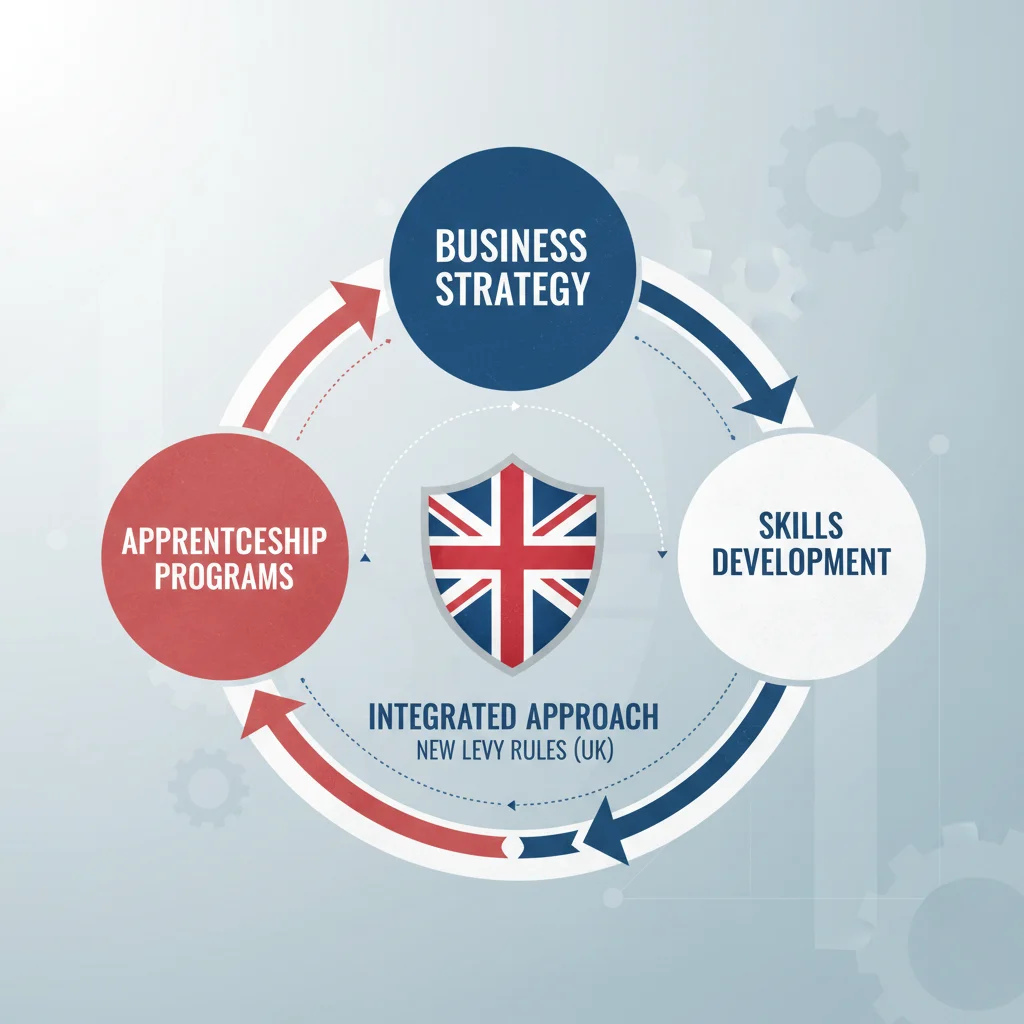
Ultimately, the long-term success of UK businesses in leveraging the apprenticeship levy will depend on their ability to integrate apprenticeship programs seamlessly into their overall business strategy. This involves not just compliance, but also seeing apprenticeships as a vital tool for talent acquisition, employee retention, and fostering a culture of continuous learning. By staying informed, engaging proactively with policymakers and training providers, and adapting their strategies as new rules emerge, businesses can ensure they maximize the value derived from their levy contributions and build a resilient, skilled workforce ready for the future. The apprenticeship levy is more than just a tax; it’s an investment in future growth.
Frequently Asked Questions
What is the primary purpose of the apprenticeship levy?
The primary purpose of the apprenticeship levy is to fund new apprenticeships in England, aiming to increase the quantity and quality of apprenticeships to improve skills and productivity across the UK. It ensures a dedicated investment stream for workforce development initiatives.
Which businesses are required to pay the apprenticeship levy?
Businesses in the UK with an annual pay bill exceeding £3 million are required to pay the apprenticeship levy. This applies to both private and public sector organizations that meet this payroll threshold.
Can unspent apprenticeship levy funds expire?
Yes, unspent apprenticeship levy funds do expire. Funds in an employer’s Apprenticeship Service account expire 24 months after they enter the account if they are not used, emphasizing the need for timely investment in training.
How can businesses use their apprenticeship levy funds more flexibly now?
Businesses can now use their levy funds more flexibly by transferring a portion of their unspent funds to other businesses, particularly those in their supply chain or smaller enterprises, to support their apprenticeship training costs.
What is the ‘end-point assessment’ in apprenticeships?
The ‘end-point assessment’ (EPA) is an independent assessment that takes place at the very end of an apprenticeship program. It evaluates whether the apprentice has gained the skills, knowledge, and behaviors required for the occupation, ensuring quality and competence.
The apprenticeship levy rules represent a dynamic and crucial aspect of workforce development for UK businesses. By understanding the latest changes, from the expanded scope of levy usage to funding band adjustments and the increased focus on quality and outcomes, companies can transform their levy obligations into strategic advantages. Proactive engagement with these regulations allows businesses to effectively address skill gaps, foster talent, and contribute to a more skilled national workforce. The ability to transfer funds, the emphasis on robust training, and the ongoing evolution of eligibility criteria all underscore the need for continuous learning and adaptation from employers.
Embracing these changes not only ensures compliance but also positions businesses to maximize their return on investment in training. By integrating apprenticeships into their broader HR and talent strategies, UK companies can build a resilient, adaptable, and highly skilled workforce ready to meet the challenges and opportunities of the future. Staying informed through official channels and actively planning your apprenticeship programs will be key to unlocking the full potential of the apprenticeship levy for your organization’s growth and success.