2026 Global Meningitis Response: Progress, Vaccines, and Challenges
Meningitis remains one of the most urgent infectious disease threats worldwide, but the 2026 Global Meningitis Response shows that real progress is possible when public health systems, vaccines, and surveillance work together. Over the past several years, countries, health agencies, and global partners have expanded vaccination programs, improved outbreak detection, and strengthened treatment pathways. At the same time, meningitis still causes preventable illness, disability, and death—especially where access to care is limited.
Understanding the 2026 Global Meningitis Response means looking at both the wins and the gaps. New vaccine strategies are reducing disease caused by key bacterial strains, but meningitis caused by other pathogens, delayed diagnosis, and inequitable access to prevention continue to challenge global health systems. This article breaks down where progress is happening, what vaccines are making a difference, and what still needs attention in 2026 and beyond.
Understanding the 2026 Global Meningitis Response
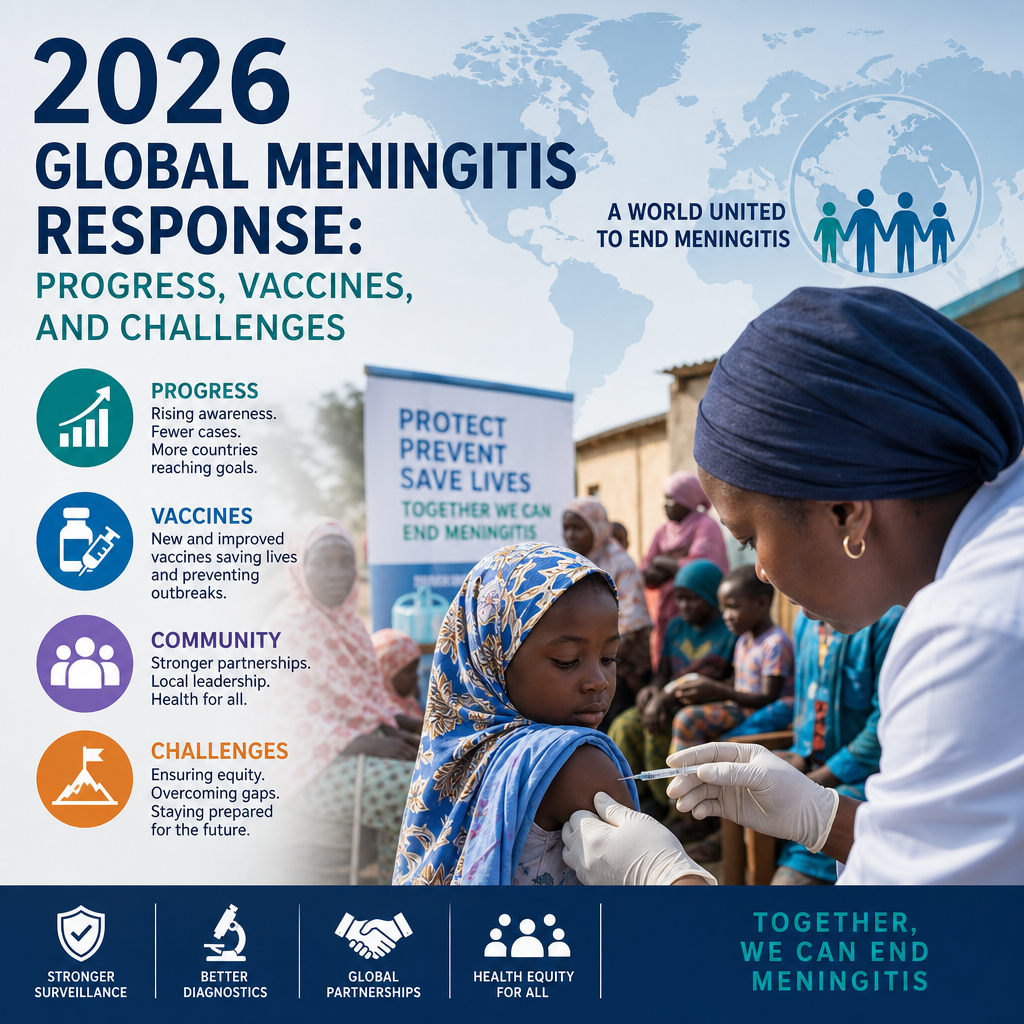
The 2026 Global Meningitis Response is not a single program. It is a coordinated effort involving ministries of health, the World Health Organization (WHO), the African Union, Gavi, UNICEF, researchers, and local health workers. The goal is simple but ambitious: reduce meningitis cases, prevent outbreaks, and save lives through vaccination, surveillance, rapid treatment, and public education.
Meningitis is inflammation of the membranes around the brain and spinal cord. It can be caused by:
- Bacteria, which often lead to the most severe disease
- Viruses, which are usually less severe but still important
- Fungi and other rare causes, especially in people with weakened immune systems
Bacterial meningitis remains the main focus of global response efforts because it can progress quickly and cause permanent complications such as hearing loss, seizures, or neurological injury.
Major Progress in 2026
The most encouraging part of the 2026 Global Meningitis Response is that public health action is working. Several trends stand out.
Expanded vaccine access
Vaccination remains the strongest tool for prevention. More countries have introduced or expanded routine immunization against major meningitis-causing bacteria, especially Neisseria meningitidis, Streptococcus pneumoniae, and Haemophilus influenzae type b (Hib).
In practical terms, this means:
- More infants receive protection early in life
- More adolescents and young adults are reached with meningococcal vaccines
- More outbreak-prone regions are using preventive campaigns to reduce transmission
These gains matter because meningitis often spreads in communities, schools, dormitories, military barracks, and other settings where people live closely together.
Better outbreak detection
Health systems have improved their ability to detect unusual clusters of disease earlier. Stronger laboratory capacity, digital reporting systems, and faster communication between local and national health authorities make it easier to identify outbreaks before they grow.
Early detection helps by:
- Speeding up treatment for suspected cases
- Guiding targeted vaccination campaigns
- Reducing the number of people exposed
- Improving case tracking and contact tracing
Stronger global coordination
The global meningitis agenda now benefits from more focused coordination than in the past. Governments and partners are increasingly aligning around shared goals such as:
- Reducing epidemic meningitis in high-risk regions
- Closing immunization gaps
- Improving access to diagnostics and antibiotics
- Tracking long-term disability among survivors
This coordinated approach makes it easier to direct resources where they are needed most.
Vaccines at the Center of Prevention
Vaccines are the backbone of the 2026 Global Meningitis Response. They do not solve every form of meningitis, but they have changed the disease landscape dramatically.
Meningococcal vaccines
Meningococcal vaccines protect against Neisseria meningitidis, a leading cause of epidemic meningitis. Different vaccine formulations target different serogroups, and this matters because disease patterns vary by region.
Common vaccine strategies include:
- MenA vaccines, which have been especially important in parts of Africa’s meningitis belt
- MenACWY vaccines, used in many countries for broader protection
- MenB vaccines, which are used in some national immunization programs and risk-based recommendations
The key public health value is not just individual protection. When enough people are vaccinated, transmission can fall, creating community-level protection.
Pneumococcal vaccines
Streptococcus pneumoniae can cause meningitis, pneumonia, sepsis, and other serious infections. Pneumococcal conjugate vaccines have been essential in lowering disease burden in children and reducing invasive pneumococcal disease in many settings.
These vaccines are especially important because:
- Young children are highly vulnerable
- Adults with certain chronic conditions also face increased risk
- Pneumococcal disease remains a major cause of severe bacterial infection globally
Hib vaccines
The Hib vaccine has been one of the clearest public health success stories. Where it is widely used, Hib meningitis has dropped sharply. That said, not all countries have equal coverage, and immunization gaps still leave some children exposed.
Why vaccine coverage still matters
Even effective vaccines cannot protect communities if coverage is uneven. In 2026, one of the biggest lessons from the global response is that access is only part of the solution. Timely delivery, public trust, routine follow-up, and reliable supply chains matter just as much.
Where the Response Still Faces Challenges
Despite progress, the 2026 Global Meningitis Response faces serious obstacles. Some are logistical, while others are medical or social.
Unequal access to vaccines
Not every country has the same ability to purchase, store, or deliver vaccines. Rural communities, conflict zones, and low-resource regions often face the biggest barriers. Even when vaccines are available nationally, last-mile delivery can break down.
Common barriers include:
- Weak supply chains
- Limited cold chain infrastructure
- Staff shortages
- Cost and financing constraints
- Missed opportunities for routine immunization
Meningitis beyond the main vaccine targets
Vaccines cover several major causes, but not all. Viral meningitis, fungal meningitis, and bacterial strains not fully covered by existing vaccines remain concerns. This means prevention strategies must go beyond immunization alone.
Delayed diagnosis and treatment
Meningitis can worsen quickly. In many settings, people do not reach care early enough, or health workers may not immediately suspect meningitis. Delays in diagnosis can increase the risk of death and long-term disability.
Symptoms may include:
- Fever
- Severe headache
- Neck stiffness
- Nausea or vomiting
- Sensitivity to light
- Confusion or altered mental status
Because symptoms can overlap with other illnesses, clinicians need training and access to diagnostic tools.
Misinformation and vaccine hesitancy
Like many immunization programs, meningitis prevention can be undermined by misinformation. Concerns about safety, mistrust of health systems, and cultural barriers can lower uptake, especially if communication is weak or inconsistent.
Health authorities have learned that messaging works best when it is:
- Clear and culturally appropriate
- Delivered by trusted local voices
- Focused on practical benefits and safety
- Responsive to community concerns
Why Surveillance and Laboratory Capacity Matter
A major theme of the 2026 Global Meningitis Response is that vaccination works best when paired with strong surveillance. Knowing which pathogen is circulating, where cases are appearing, and which populations are affected allows health authorities to respond faster and smarter.
What good surveillance does
Effective surveillance helps public health teams:
- Detect outbreaks early
- Confirm the cause of disease in the lab
- Track changes in strain distribution
- Evaluate vaccine impact
- Guide future immunization policy
Lab confirmation is essential
Not every suspected meningitis case is caused by the same organism. Laboratory testing helps identify the exact pathogen and can influence treatment, outbreak response, and long-term planning. In regions with fewer lab resources, international support and regional reference labs can make a major difference.
The Role of Treatment and Supportive Care
Vaccines prevent many cases, but people who develop meningitis still need rapid treatment. The 2026 Global Meningitis Response includes stronger systems for:
- Early antibiotic treatment for suspected bacterial meningitis
- Hospital care with monitoring for complications
- Supportive care such as hydration, oxygen, and seizure management
- Follow-up services for survivors
Long-term complications matter
Many meningitis survivors live with lasting effects. These may include:
- Hearing loss
- Learning difficulties
- Motor impairment
- Epilepsy
- Behavioral or cognitive changes
That is why the response cannot end when the infection clears. Survivors often need rehabilitation, audiology services, educational support, and mental health care.
Regional Priorities in 2026
Different regions face different meningitis risks, so the response must be tailored.
The meningitis belt in Africa
The African meningitis belt remains a major focus because of its history of large epidemics. Vaccine campaigns, surveillance improvements, and rapid response planning are especially important here. The goal is to prevent large seasonal outbreaks before they overwhelm health systems.
High-income countries
In higher-income settings, meningitis response often focuses on:
- Adolescent and college-age vaccination
- Outbreak control in schools or dormitories
- Tracking shifts in serogroup prevalence
- Protecting high-risk groups such as immunocompromised patients
Humanitarian and conflict settings
Conflict, displacement, and overcrowding create the perfect conditions for outbreaks. Humanitarian settings need flexible immunization delivery, rapid case reporting, and mobile health services to reduce risk.
What a Strong Public Health Strategy Looks Like
The best 2026 Global Meningitis Response strategies combine prevention, early action, and recovery support.
A practical public health checklist
A strong national or regional approach usually includes:
- Routine childhood vaccination
- Targeted vaccination for adolescents and high-risk groups
- Outbreak preparedness plans
- Reliable diagnostics and lab confirmation
- Clear referral pathways for suspected cases
- Public education on warning signs
- Disability support for survivors
Community engagement is not optional
Programs work better when communities trust them. Local leaders, schools, religious organizations, and healthcare workers can improve vaccine acceptance and help families seek care earlier when symptoms appear.
What to Watch Beyond 2026
The next phase of the 2026 Global Meningitis Response will likely depend on three things:
- Broader vaccine reach, especially in underserved regions
- Better data, so countries can see where disease is moving
- More resilient health systems, able to handle outbreaks quickly
Research also continues on improved vaccine formulations, longer-lasting protection, and better ways to deliver immunization in hard-to-reach populations. The future response will likely be more precise, but it will still depend on basic public health foundations: trust, access, and speed.
Frequently Asked Questions
What is the main goal of the 2026 Global Meningitis Response?
The main goal is to reduce meningitis cases, prevent outbreaks, and lower deaths and disability through vaccination, surveillance, early treatment, and community education. The response focuses on both immediate outbreak control and long-term disease prevention.
Which vaccines are most important for meningitis prevention?
The most important vaccines include meningococcal vaccines, pneumococcal vaccines, and Hib vaccines. These protect against some of the most serious bacterial causes of meningitis and are central to routine immunization and outbreak prevention strategies.
Why does meningitis still occur if vaccines exist?
Vaccines do not cover every cause of meningitis, and coverage is not universal. Some people remain unvaccinated, some pathogens are not fully preventable with current vaccines, and outbreaks can still happen in under-immunized or crowded settings.
What are the warning signs of meningitis?
Common warning signs include fever, severe headache, neck stiffness, vomiting, sensitivity to light, confusion, and sometimes a rash. Symptoms can progress quickly, so suspected meningitis should be treated as a medical emergency.
How can communities help improve meningitis prevention?
Communities can support prevention by encouraging vaccination, recognizing symptoms early, reducing misinformation, and helping people seek care quickly. Trusted local communication is especially important for improving vaccine confidence and outbreak response.
Official Resources
- World Health Organization: Meningitis
- CDC: Meningococcal Disease
- UNICEF: Immunization
- Gavi, the Vaccine Alliance
- National Institute of Neurological Disorders and Stroke: Meningitis
Conclusion
The 2026 Global Meningitis Response shows that progress is real when vaccines, surveillance, treatment, and community engagement work together. Countries have made meaningful gains in preventing disease and responding to outbreaks, but meningitis still demands urgency. Unequal vaccine access, delayed diagnosis, and limited resources continue to put many people at risk, especially in high-burden and hard-to-reach regions.
The encouraging news is that meningitis is not an unsolved problem. Public health systems already have the tools to prevent many cases and reduce harm when infections do occur. The challenge now is to close coverage gaps, strengthen laboratory and surveillance systems, and make sure people can get care quickly when symptoms appear. For families, clinicians, and policymakers alike, the next step is clear: keep building on what works, protect the vulnerable, and treat meningitis as the preventable emergency it is.